
Giovanni Bortoluzzi
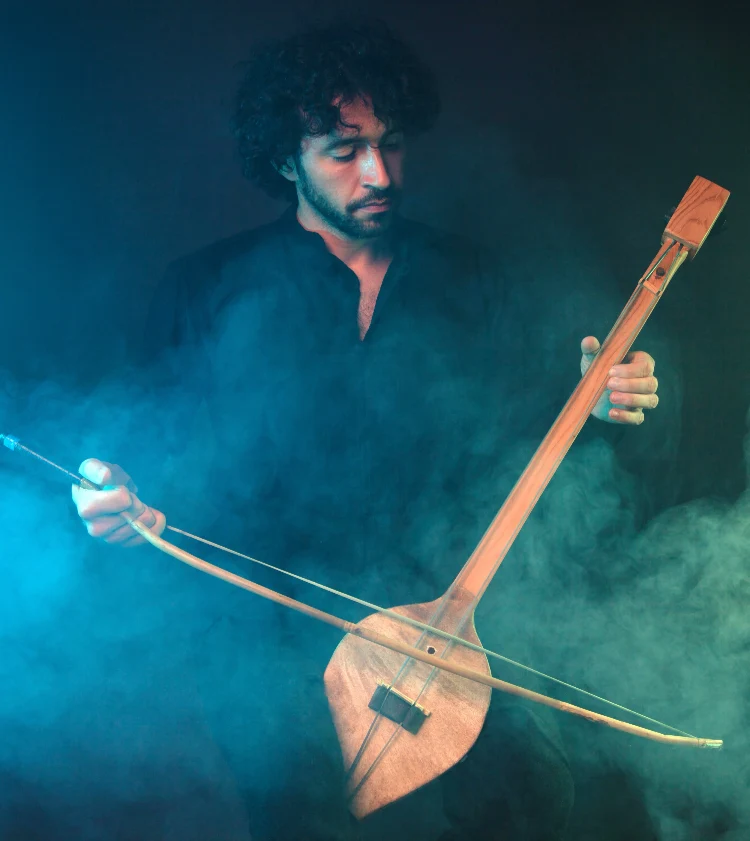
Giovanni Bortoluzzi is an overtone singer, music teacher, and multi-instrumentalist. Since 2014, he has been teaching overtone singing and throat singing techniques, with a particular focus on khöömei—the traditional overtone singing style of the Republic of Tuva—which he learned directly from Tuvan masters.
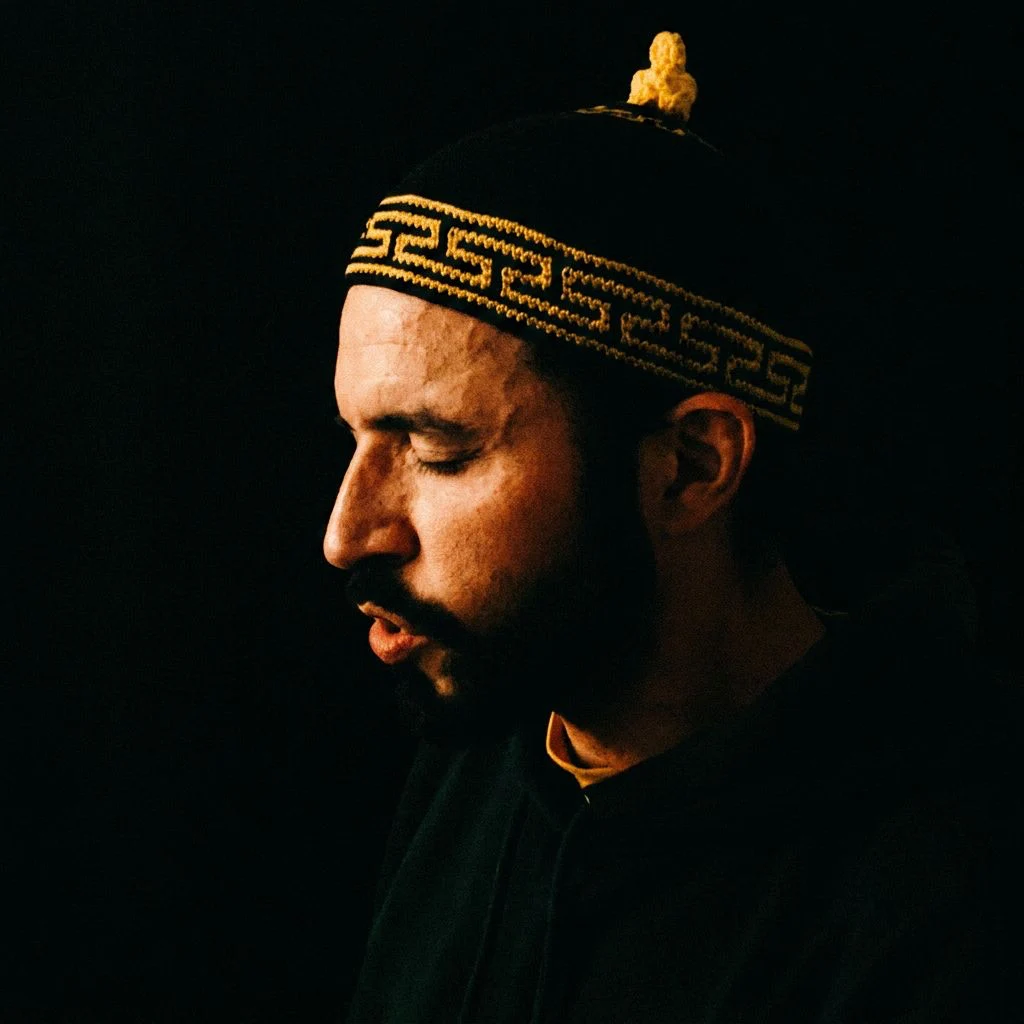
His approach brings together two distinct yet synergistic dimensions: on the one hand, the direct experience of sound within the human body; on the other, the scientific, historical, and ethnomusicological study of vocal techniques.
His teaching helps students understand the timbral differences between contemporary and traditional overtone singing, and then familiarizes them with the melodic role of harmonics, as well as their numbering and identification. Finally, it leads to the study of melodies with one or more fundamental tones, culminating in harmonization within choral contexts.
Giovanni teaches overtone singing to both beginners and those who already have experience but wish to refine their skills or learn new techniques. Using the Metodo4L, he guides students on a journey through four interconnected areas:
• Study of vocal timbres
• Study of the harmonic and subharmonic series
• Study of single-fundamental melodies
• Study of melodies with two or more fundamentals
To study with Giovanni, you can contact him through the contact page to discuss the best course of study for you, or arrange a masterclass directly.
Here are the teachers with whom Giovanni studied between 2013 and 2026:


The journey of Giovanni Bortoluzzi
He began studying music and the electric bass, focusing primarily on jazz and blues improvisation.
He discovered overtone singing and was deeply impressed by the possibility of perceiving and shaping the natural harmonics already present in everyone’s voice. He thus began studying contemporary techniques under the guidance of Miroslav Grosser and embarked on a personal exploration of the Tuvan kargyraa style.
In 2015, Giovanni Bortoluzzi began teaching Overtone Singing and, in collaboration with Walter G. Mantovani, developed the Metodo4L—a practical teaching approach based on direct listening, body awareness, vocal exploration, and an understanding of the acoustic aspects of sound.
The method offers defined and tangible areas of exploration: the study of vocal timbres, the harmonic and subharmonic series, and melodies with one or more fundamental frequencies.
That same year, he began conducting research with Walter Mantovani (creator of armonici.it and harmonicarium).
After moving to Sardinia in May, he began studying the sardinian throat singing techniques of Canto a Tenore—bassu and contra—as part of a case study conducted with a team of phoniatrists. As both a research subject and the study’s coordinator, he underwent real-time laryngostroboscopy and magnetic resonance imaging (MRI) examinations aimed at analyzing the phonatory mechanisms of the two techniques. The study highlighted similarities between the guttural voices of Tenore singing and the Tuvan techniques of Kargyraa and Khöömei, while acknowledging their distinct stylistic, phonetic, and cultural characteristics.
He presented a study at the Pacific Voice Conference in Kraków on contemporary overtone singing techniques (L, J, NG) and the Tuvan ezengileer style, analyzed using dynamic magnetic resonance imaging.
The study was subsequently published in the *Journal of Voice* and on PubMed.
He made his debut in Italian theaters as an overtone singer in the production *Joie de vivre* by Simona Bertozzi’s theater company.
During the International Symposium in Tuva, Giovanni Bortoluzzi receives the “For Mastering the Kargyraa Technique” award. That same year, he writes and publishes the first edition of the book *4L: The Method for Singing Overtones*.
At the Echoes of the Steppe International Festival, he receives the “Best Kargyraa Performance” award.
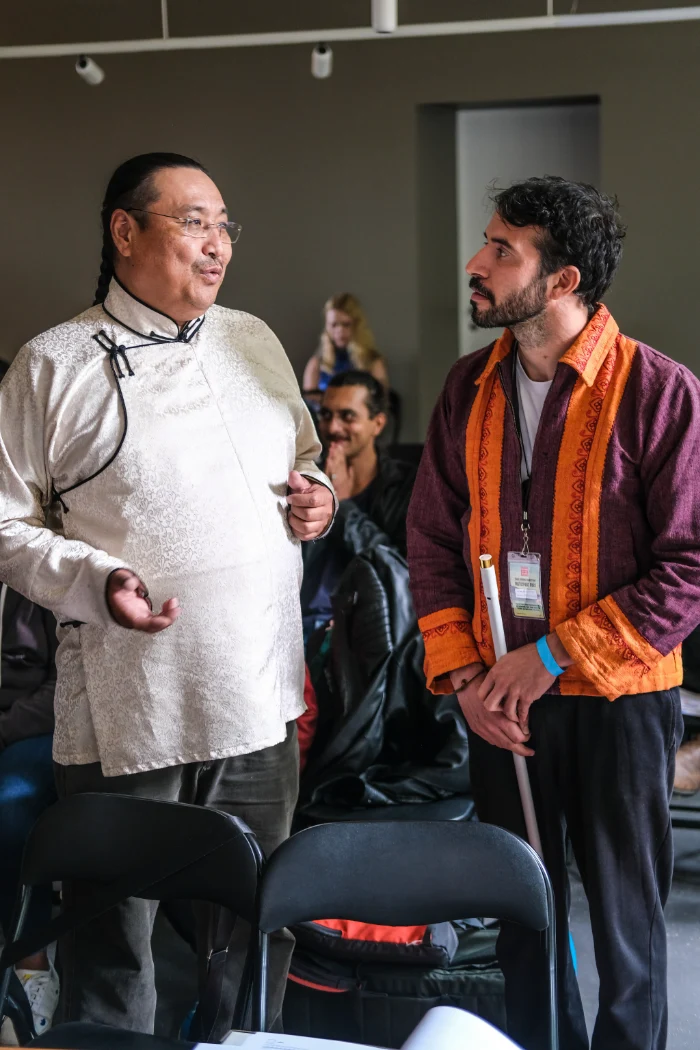
He had the opportunity to meet the Alash Ensemble, further deepening his study of traditional Tuvan styles. On that occasion, he received direct recognition for how faithfully his performances of kargyraa, khöömei, and sygyt adhered to traditional Tuvan models.
Images
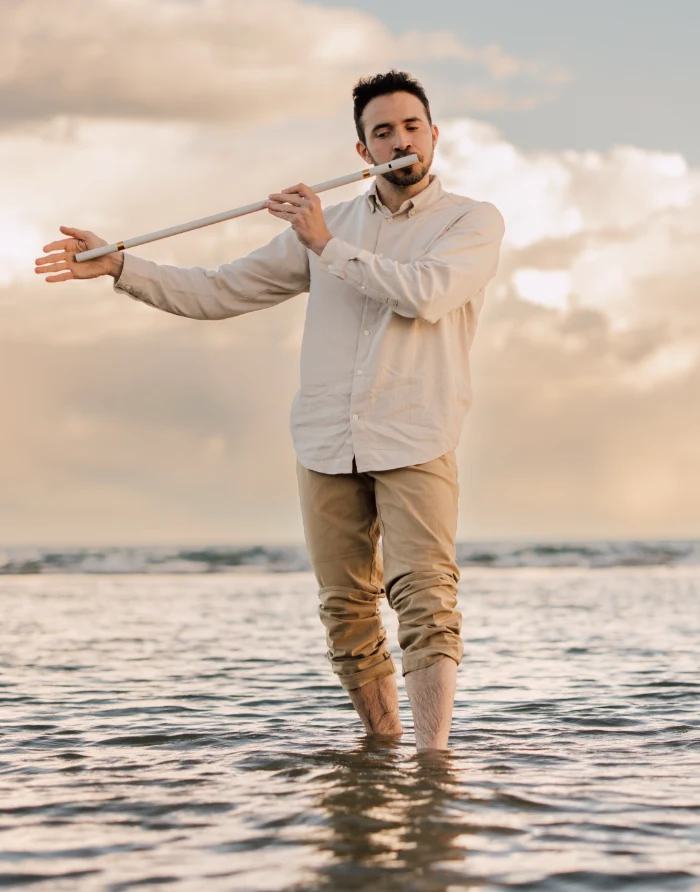
Today
He holds workshops, master classes, lectures, and concerts in Italy and abroad. He continues to study, teach, and conduct research, because he considers learning to be a lifelong process. In Overtone Singing, every new technique reveals new sounds, every sound reveals a detail, and every detail can become the starting point for a new exploration.

