The Jaw Harp: A Journey Around the World Through Breath, Rhythm, and Harmonics
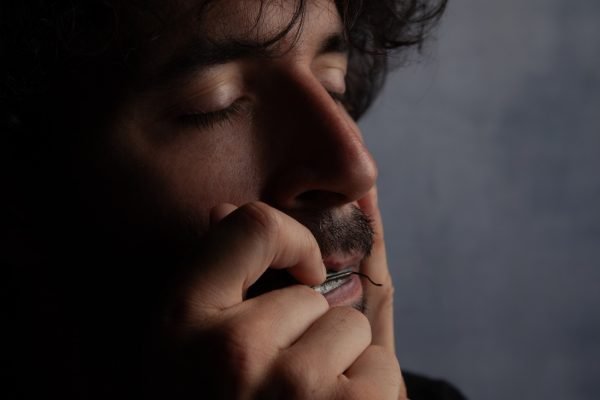
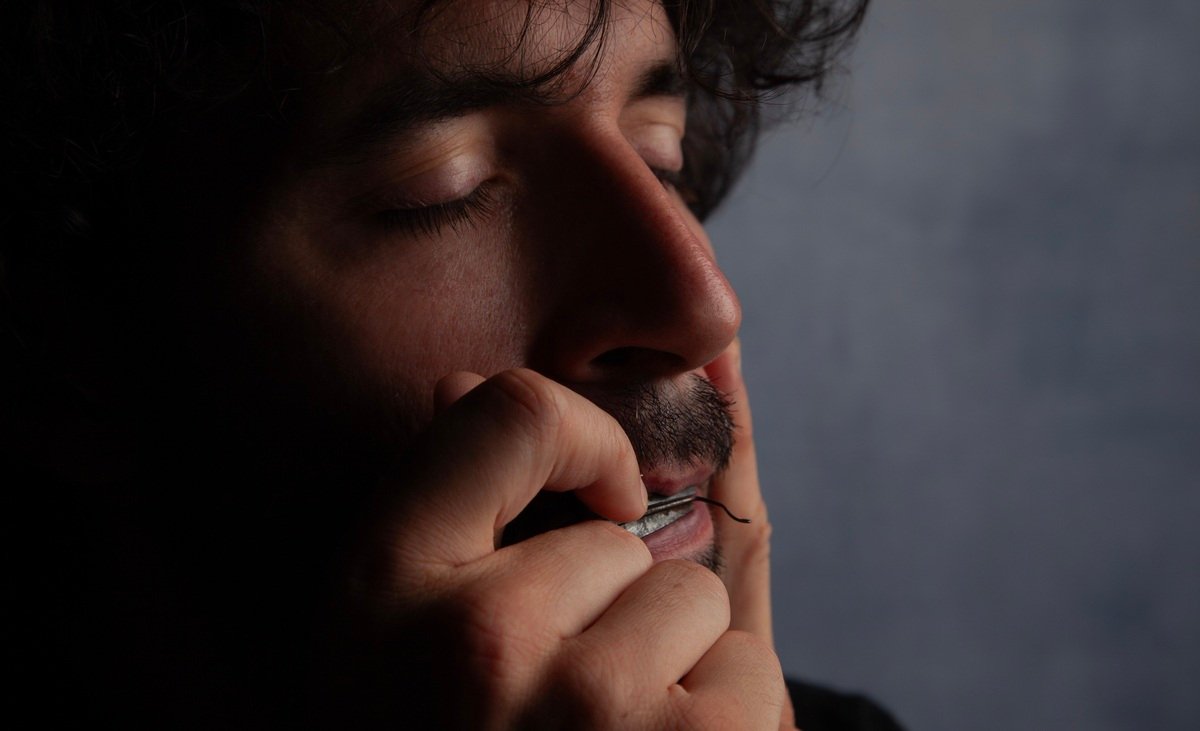
The jaw harp is one of the most widespread instruments in the world. It is a lamellophone consisting of a frame and a flexible tongue—usually made of metal or bamboo—that is plucked while the musician uses their mouth as a resonator. It is found on nearly every continent, with a wide variety of names, forms, and repertoires, and serves as a rhythmic, melodic, and ritual instrument.
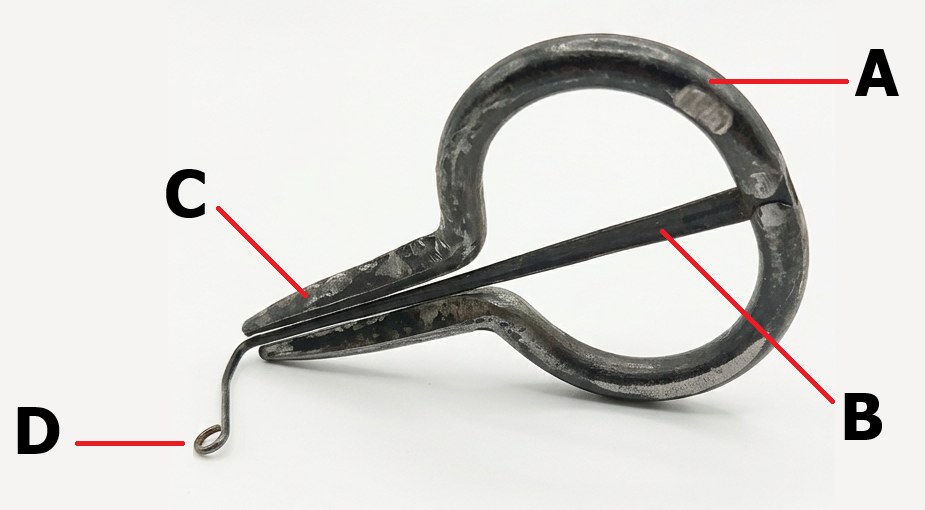
A: frame
B: reed
C: tines
D: curl
The basic idea is quite simple: the reed produces a relatively steady fundamental tone, while the shape of the oral cavity, the tongue, the breath, and the position of the throat select and amplify certain harmonics. This is why the jaw harp is one of the most natural instruments for those studying overtone singing: both involve the relationship between a vibrating source and a resonant filter.
One instrument, hundreds of names
In Italian, the instrument is called a “scacciapensieri,” a term first recorded in 1722 by Filippo Bonanni in *Il Gabinetto Armonico*. The name evokes a popular and almost therapeutic use: playing it to take one’s mind off other thoughts or worries.
In English, there are several names for it: Jew’s harp, jaw harp, and mouth harp. The term “Jew’s harp” is historically the most common, but it has no connection to the Jewish people; for this reason, many authors and musicians today prefer “jaw harp” or “mouth harp.”
La varietà dei nomi riflette la vastissima diffusione dello strumento:
| Name | Region / Tradition |
|---|---|
| Scacciapensieri | Italy |
| Marranzanu, mariòlu, ngannalarrùni | Sicily |
| Trunfa, trumba, malarruni | Sardinia |
| Cirimia, ribeba, ciribebola | Upper Valsesia, Piedmont |
| Morsing, morchang, murchunga | India, Nepal, Pakistan |
| Khomus / xomus | Tuva, Sakha-Yakutia, Inner Asia |
| Vargan | Russia |
| Kou-xian / kouxian | China |
| Mukkuri | Japan, Ainu tradition |
| Munnharpe | Norway |
| Maultrommel | Germany |
| Jaw harp | France |
| Doromb | Hungary |
| Drymba | Ukraine |
| Dambrelis | Lithuania |
| Dan moi | Vietnam |
This list is not exhaustive: the jaw harp has been documented in at least sixty-five other countries, with traditions ranging from European folk music to Siberian shamanic practices.
The Archaeological Origins of the jaw harp
The oldest and most accurately dated archaeological evidence comes from China. At the Shimao site in Shaanxi Province, excavations have unearthed more than twenty bone flutes, along with unfinished specimens; dating of the associated materials indicates an age of approximately 4,000 years, within the context of the Longshan culture.
A Chinese depiction from the 3rd century B.C. shows a figure who appears to be playing an instrument of this type. However, claims that the pan flute was already known to the Romans are not supported by solid archaeological evidence: the instrument’s presence in Europe is documented with greater certainty only from the Middle Ages onward.
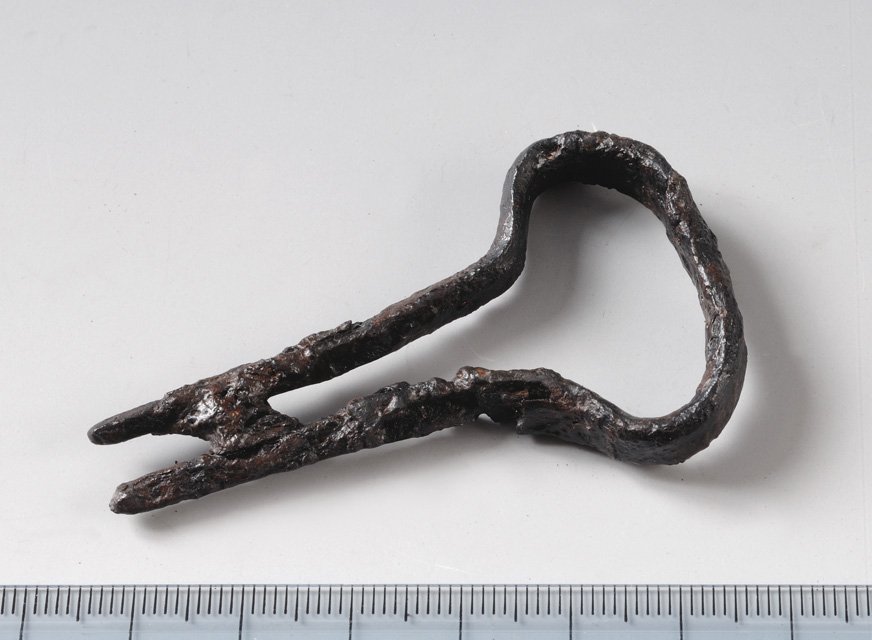
The oldest European finds recognized by scholars come from eastern Moldova and date to the late 10th century. An important example comes from Uppsala, Sweden, and dates to the 13th century.
The most conservative reconstruction is therefore as follows: the jaw harp likely has very ancient Asian origins; it spread westward during the Middle Ages and subsequently became widespread worldwide through trade, migration, colonialism, and the circulation of handicrafts.
Scandinavian Mouth Harp: The Munnharpe
In Scandinavia, the jaw harp is known primarily as a “munnharpe” in Norway and a “munspel” in some Swedish traditions.
Medieval finds, such as the one from Uppsala, confirm that the instrument has been firmly established in Northern Europe since at least the 13th century.

In Norwegian traditions, the munnharpahas been used to accompany dances, play folk tunes, and provide entertainment in homes. Its metallic, percussive sound lends itself very well to dance rhythms, but the playing technique also allows for the articulation of rather elaborate melodic phrases, thanks to control of the oral cavity.
Scandinavia is also an important region for the artisanal construction of this instrument. In Norway, in particular, the production of the munnharpe has shown remarkable continuity: over time, some artisans have passed down the shapes, tunings, and techniques for finishing the reed.
Italy: Piedmont, Sardinia, and Sicily
In Italy, the mouth harp/scacciapensieri has a particularly rich history, with three areas of great importance: Upper Valsesia in Piedmont, Sardinia, and Sicily. Despite popular belief, it is not found exclusively in Sicily!
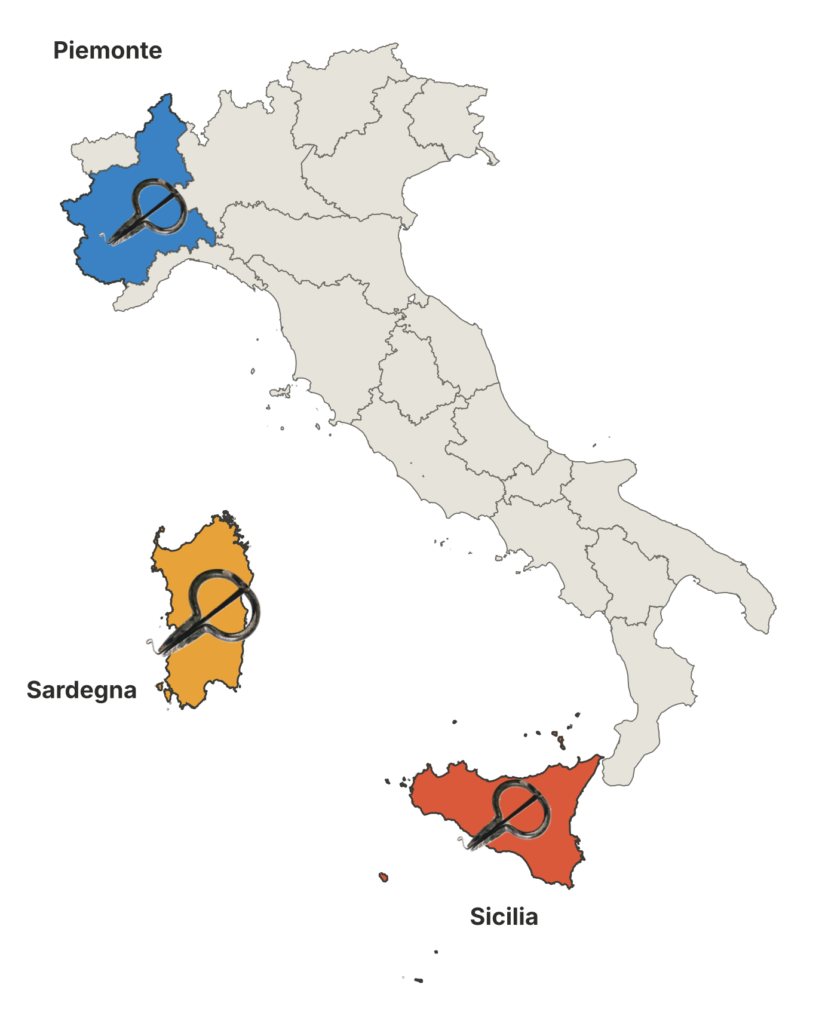
Piemonte and Valsesia
In the upper Valsesia valley, at the foot of Monte Rosa, one of Europe’s most important production centers developed. The mountain hamlets, including Boccorio, became famous for the manufacture of jaw harps known locally as cirimia, ribeba, and ciribebola.
Instrument production in Valsesia has been documented since the 16th century and reached a remarkable industrial scale. During its peak, production is said to have totaled about one and a half million instruments per year, which were exported throughout Italy, across Europe, and as far as Central and North America. The industry gradually declined in the second half of the 19th century.
Sardegna: sa trunfa
In Sardinia, the jaw harp is called a trunfa, trumba, or malarruni. It is a folk instrument associated with shepherding, festivals, community gatherings, and the island’s traditional repertoire.
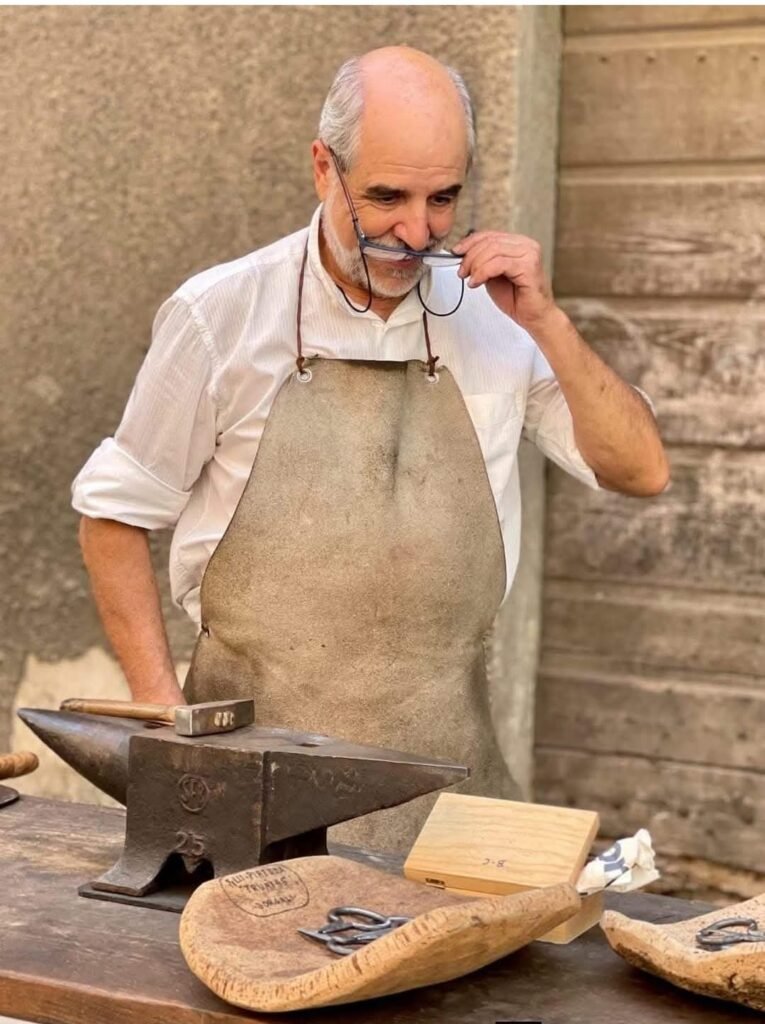
The first written record of the Sardinian term is generally attributed to Vincenzo Porru, in his *Nou dizionario universali sardu-italianu* (New Universal Sardinian-Italian Dictionary) of 1832. The source suggests that as early as the beginning of the 19th century, there were local artisans capable of building the instrument.
Today, the trunfa is one of the most vivid examples of the Italian jaw harp tradition, thanks in part to musicians and teachers who have kept the practice alive and expanded its expressive possibilities.
Sicilia: il marranzano
In Sicily, the jaw harp is known as a “marranzano,” but also as a “mariòlu” or “ngannalarrùni.” As you can see in the video, it’s played using a specific grip, striking the tongue with a hooked finger while keeping the elbow raised.
The marranzano is traditionally played to accompany songs, tarantellas, and social gatherings.
It is also associated with Sicilian carts, shepherds, and rural life: in the silence of the countryside at night, its sound can be heard from a considerable distance.
Ennio Morricone used the jaw harp in some of the soundtracks for the so-called spaghetti westerns, helping to create that arid, tense, and vaguely dreamlike atmosphere that made the genre instantly recognizable around the world.
Il successo internazionale dei film di Sergio Leone e delle musiche di Morricone ha fatto sì che il suono dello scacciapensieri diventasse, per molti ascoltatori, un vero e proprio codice sonoro del western.
India: morsing e morchang
In India, the jaw harp is called morsing, morchang, murchunga, mukharshanku, or, in some areas, changu. It is particularly widespread in Rajasthan, Pakistani Sindh, Nepal, and in the Carnatic music of southern India.
The Indian tradition is an ancient one: some sources trace the instrument’s presence on the subcontinent back more than 1,500 years, although its exact origin remains poorly documented and is often shrouded in folklore.
The morsing in Carnatic music is particularly refined: it is not merely a rhythmic accompaniment, but can support melodic phrases, imitate percussion through konnakol, and interact with soloists. The morchang of Rajasthan, on the other hand, is often associated with folk contexts, dances, and solo performances.
The Tuvan Khomus.
In Tuva, the jaw harp is called khomus. The metal version is called a demir khomus, literally “iron khomus,” and consists of a flexible tongue attached to a frame.
The Tuvan techniqueis highly sophisticated from a melodic standpoint: the musician constantly adjusts the position of his mouth, tongue, and airflow to highlight the harmonics and use them to reproduce specific melodies. The instrument has only one fundamental note, but the player creates melodies by emphasizing the higher partials.
In Tuva, there are also wind chimes made from plant materials, including the söösken khomus made from mountain willow, the tyarti khomus made from a sliver of wood, the daya khomus made from honeysuckle, and the sheler khomus made from bamboo. This variety shows that the khomus is not a standardized object, but a family of instruments tied to the local territory and resources.
It also features in Tuvan shamanic practices and mythological narratives.
Japan: the mukkuri ainu
In Japan, the jaw harp is best known as the “mukkuri” in the tradition of the Ainu people, who are indigenous to Hokkaidō and the surrounding areas. It is generally made of bamboo, has a flexible tongue, and is played using a technique based on the modulation of the mouth and breath.
The mukkuri is not a widely used instrument in modern Japanese music, but it has significant ethnomusicological value.
Its presence confirms that the principle of the jaw harp has spread across Asia and been adapted to cultural contexts that are very different from one another.
From China, the Kouxiang
Since each mouth harp is limited to one main pitch and its harmonics, you need to combine several mouth harps to produce more notes. Here is an excellent example from China:
Rhythmic and Melodic Use
The jaw harp has two main playing styles, which can often be combined.
Rhythmic Use
In rhythmic playing, the musician plucks the reed in regular patterns, using the tongue, throat, and phonemes to create articulations similar to those of a drum set or vocal percussion. This allows for sharp hits, rolls, accents, pauses, and “breath” effects.
This style is very common in Sicily, Sardinia, India, and many Asian traditions. The player can accompany a dance, a song, or another instrument, maintaining a steady beat and varying the timbre without necessarily changing the pitch.
Melodic Use of the Jaw Harp
When playing melodically, the musician selects the harmonics of the reed by changing the shape of the mouth. By raising or lowering the tongue, rounding the lips, opening the throat, or varying the air pressure, the musician makes different partials of the harmonic series audible.
The result is a discernible melody over a background note. It’s the same principle as overtone singing: the sound source produces multiple frequencies simultaneously, while the resonator selects certain ones. That’s why the jaw harp and overtone singing can interact so naturally.
Tutorial by Giovanni Bortoluzzi
For a practical, step-by-step guide, a useful resource is Giovanni Bortoluzzi’s tutorial, posted on YouTube on May 31, 2023. The video is about 12 minutes and 46 seconds long and teaches the basics of the jaw harp, from how to hold it to playing melodies.
The tutorial covers:
- Grip and Position: How to hold the instrument without gripping it too tightly.
- Positioning the Tines: Place the frame in front of your teeth, leaving the reed free.
- How to Strike the Reed: Control with the thumb or index finger.
- Tips for Beginners: Avoid biting the instrument and maintain a safe posture.
- Basic Rhythm: Pulsation, foot tapping, and breathing.
- Imitating drum rhythms: using rhythmic phonemes such as D, G, L, Th, L, and R.
- Using the voice: adding vocal sounds to the drone of the reed.
- Melodic section: a selection of harmonics based on melodies such as “Frère Jacques”, the “Ode to Joy,” and Grieg’s “Morning.”
Dizzy Gillespie and the Jazz Jaw Harp
The jaw harp isn’t just part of folk traditions. Even the great jazz trumpeter Dizzy Gillespie used it on some of his recordings. You can hear it in the songs “First Chance” and “Dizzy the Duck,” where the instrument is used both as a rhythmic element and as a solo instrument with a surprising timbre.
Gillespie, one of the founders of bebop and a central figure in Afro-Cuban jazz, thus demonstrates how an ancient and popular instrument can become part of a modern and sophisticated musical language. His experience confirms that the jaw harp is not merely an “ethnic curiosity,” but an instrument with genuine expressive and rhythmic capabilities.
A large family of instruments
The jaw harp is hard to put into a specific category. It is an idiophone, because the sound is produced by the vibration of the reed itself; it is also a lamellophone, because the vibrating part is a reed; and finally, it is an indirect aerophone, because the musician’s mouth amplifies and shapes the sound.
There are two major design families:
- Frame-and-slat jaw harp, typical of Europe, Central Asia, India, and much of the modern world.
- Flexible-slat jaw harp, often made of bamboo, common in some parts of Asia and Southeast Asia.
The difference isn’t just morphological: the response to the pick, the stability of the fundamental, the ease of producing harmonics, and the type of repertoire that can be played all change.
A Story That Lives On
The jaw harp is not a relic of the past. It is actually played all over the world—in Sardinia, Sicily, India, Tuva, Scandinavia, and Japan, just to name a few places. Its forms change, its names change, but the principle remains the same: a strip vibrates, and the mouth listens, breathes, and filters the sound.
From the Shimao discoveries to Dizzy Gillespie’s jazz recordings, from the Sicilian marranzanu to the Tuvan khomus, the jaw harp demonstrates an extraordinary capacity for adaptation. It is a small, portable, and seemingly simple instrument, yet one capable of embodying rhythm, melody, harmonics, and cultural memory.
Tag:jaw harp, mouth harp

You may also like

The History of the Flute: From Prehistoric Bone to 3D Printing