The History of Female Throat Singing in Tuva: The Story of the Tyva Kyzy
On February 4, 2020, I met Choduraa Tumat in Venice, at Ca’ Foscari University, during an ethnomusicology course. From that moment on, we stayed in touch, and she told me about the development of female overtone singing in Tuva, and later around the world. Her stories fascinated me especially because, during my classes, I was often asked this question: “Can women throat sing?” The answer is clearly yes, since the female’sVocal Anatomy isn’t all that different from the male vocal anatomy, but the interesting point, if anything, is to answer this question by taking into account the intricacies of the culture surrounding the world of singing, tracing back to why there have been gender biases and, at times, unexpected and not always overt taboos that have, over the years, hindered the equal spread of throat singing among both men and women. In this article, we’ll examine what happened in Tuva and what we can learn from that situation, which is now a thing of the past.
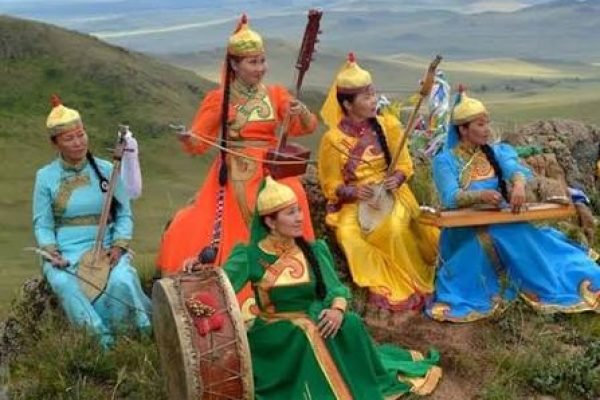
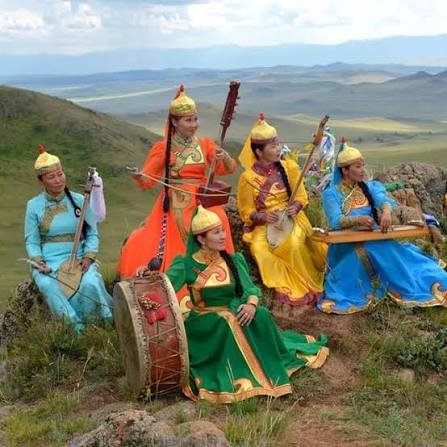
The ensemble Tyva Kyzy (which means “Daughters of Tuva” in the Tuvan language) is recognized as the first—and, to this day, the only—all-female ensemble dedicated to Tuvan overtone singing, known as “khöömei.” Khöömei has been, and still is, a form of singing traditionally performed primarily by men.
Amid the rich and vibrant soundscape of male folk groups, Tyva Kyzy remains the only all-female ensemble to perform khöömei. Between the early 1990s and the early 2000s, female overtone singing elicited a wide range of reactions from the local community: admiration, surprise, skepticism, and, in some cases, even rejection. Today, however, women have more opportunities to express their talent, and thanks to the work of Tyva Kyzy and other performers, female khöömei has gained greater visibility, not only in Tuva but also abroad.
Tuvan khöömei stands out from other forms of overtone singing in Central Asia due to its variety of styles, technical complexity, precision of execution, and unique performative qualities. In Tuva, both men and women can perform the same styles of khöömei; however, the question of when women began practicing it continues to elicit differing answers among scholars, researchers, and performers.
What taboos restricted female overtone singing?
According to some Tuvan traditions, women were forbidden from practicing khöömei, as it was believed that it could harm the health of male relatives or cause complications during childbirth. These taboos often restricted the expression of women with particular natural talent; in cases of transgression, family members could even force them to stop singing.
Have women always sung khöömei?

A historical analysis of Tuvan music shows, however, that women have practiced khöömei for a very long time. Some have kept it within the private sphere, singing in nature or just for themselves. There is also evidence, however, of female overtone singers who performed publicly, presenting styles such as khöömei, sygyt, and kargyraa before the Tuvan community, which welcomed them warmly. It has also been demonstrated that women can practice this art without harmful consequences for their health or motherhood.
Who was Choldak-Kara Oyun?
Among these iconic figures, Choldak-Kara Oyun stands out as a true living legend. The mother of the famous overtone singer Soruktu Kyrgys (early 20th century), she was the wife of a blacksmith and a mother. She sang khöömei throughout her life: during daily activities, while milking, when singing lullabies, and sometimes even while drinking Tuvan araga. The actress Kara-Kys Namzatovna Munzuk, an important figure in Tuvan culture, also recalled this woman, an ancestor of her husband.
What was daily life like for Tuvan women?
In the past, the lives of Tuvan women were marked by a very heavy workload: managing the household, raising numerous children, making leather clothing and footwear, preparing food, growing grains, and tending to livestock. Under these conditions, it was difficult to find time for khöömei or for practicing musical instruments. From ancient times to the present, khöömei has always conveyed a sense of calm and positive energy, regardless of the performer’s gender.
How did the landscape change during the Soviet era?
During the Soviet era, women were rarely seen on stage, with a few exceptions at republican festivals. A notable example is Valentina Chuldum, a native of Mongun-Taiga, who toured Europe in the early 1990s, paving the way for a new generation of female musicians. With the launch of the International Khöömei Symposium, women finally gained the opportunity to perform publicly.
What did Khunashtaar-ool Oorzhak say about female overtone singing?

As Khunashtaar-ool Oorzhak (1932–1993), a leading figure in Tuvan khöömei, stated in an article published in the magazine *Khöömei* in 1995: “We also have female khöömei performers. If you ask me what I think, I’ll say that I view them positively and support them. There’s nothing negative about it, since these voices come from nature and Mother Earth. And I’m more than happy to offer them my advice. Female voices are special, beautiful, and unique.” In the same article, Oorzhak also expressed the idea of possibly creating a female khöömei overtone singing ensemble.
How did the Tyva Kyzy ensemble come to be?
Unaware of this stance, in May 1998, several female musicians—under the guidance of Choduraa Tumat—formed an all-female group consisting of Valentina Chuldum, Shonchalai Oorzhak, Tatiana Saaya, Ailanmaa Damyran, Choduraa Tumat, Azimaa Kuzhuget, and Ailan Ondar. The group was named Tyva Kyzy, in accordance with Oorzhak’s wishes. In July of that same year, the ensemble performed for the first time at the Third International Khöömei Symposium in Kyzyl. The press described that performance as a “courageous act by delicate women.”
Formation and Repertoire
The group stands out for the originality of its repertoire and instrumentation. The repertoire consists mainly of traditional songs, performed with traditional instruments and arranged in a way that preserves their Tuvan cultural authenticity. Since 1999, Tyva Kyzy has successfully participated in numerous international festivals and has given concerts in various countries.
The voices of the two leading soloists are distinguished by their different, non-overlapping timbres, which complement one another without imitation. Choduraa Tumat and Ailanmaa Damyran, central figures in the development of female khöömei, embody the performance tradition of folk songs and accompany themselves with traditional instruments. Their repertoire includes various styles of Tuvan overtone singing: sygyt, kargyraa, khöömei, borbannadyr, and ezengileer.
The ensemble is accompanied by traditional instruments such as the igil, byzaanchy, doshpuluur, chadagan, khomus, shoor, and dungur, played by young female musicians and khöömeizhi: Sholbana Belek-ool, Ayzaana Khovalyg, Olcha Tumat, Alltynai Khuurak, and Ailang Ondar. These musicians have received recognition at international festivals, including “MIR SIBIRI” (2012), the republican “khöömei” competition (2013), and second prize at the 6th International Ethnomusicological Symposium “Khöömei as a Cultural Phenomenon of the Peoples of Central Asia.”
What is the impact of female overtone singing today?
Female overtone singing in Tuva is a constantly evolving phenomenon. Without the decisive contribution of the musicians of Tyva Kyzy, it is likely that this practice would not have achieved its current visibility, either in Tuva or in the broader Central Asian context. At the same time, interest from the international scientific community is also growing, with an increasing number of studies dedicated to the history and analysis of female overtone singing.
Today, it can be said that, thanks to the artistic commitment and dedication of these musicians, the prestige of overtone singers in the Republic of Tuva has grown considerably. Within the world of ethnic music and overtone singing, Tyva Kyzy represents one of the most significant developments in Tuvan khöömei culture.
The experience of Tyva Kyzy has also been significant beyond the borders of Tuva, as it has demonstrated that female overtone singing can have full artistic and cultural legitimacy. Their example has encouraged other female singers to follow this path, helping to raise the visibility of women in other parts of Central Asia as well, including Mongolia. A similar effect has also been observed in Sardinia, where some female singers have begun to explore tenor singing, and in various Eastern European countries, where new forms of interest in and practice of overtone singing have emerged. Tyva Kyzy has thus played a major role in setting a significant example for women around the world, encouraging them to explore the possibilities of overtone and guttural singing more deeply.
What is the current state of female overtone singing?
There have always been role models—long before the 1990s—but their popularity spread much more slowly than that of male role models. Now, thanks to the internet but above all to outreach efforts—particularly by female practitioners of throat singing from around the world—the situation is moving toward a much more stable balance, which will eventually put an end to the question, “Can women do this?”

You may also like

Tuvan Khöömei: History and Techniques