From the pentatonic scale to equal temperament: Which is better, 5 or 12 notes?
If we examine the harmonic and subharmonic series closely, we can see how pentatonic scales manifest within them. For this reason, whether consciously or not, human beings have always created music by making extensive use of these two scales, until compositional demands began to grow increasingly complex, leading to the emergence of the concept of temperament—that is, a system that mathematically regulates the relationship between the notes of a musical instrument, so that they sound good together both melodically and harmonically.
The history of musical temperaments, however, is a history of compromise. Whenever a musical culture attempts to organize sounds in a coherent way, it encounters a simple yet inevitable problem: the perfect intervals resulting from the natural ratios suggested by the harmonic and subharmonic series do not always meet the practical needs of actual music.
This gave rise to scales, tunings, adjustments, local variations, and increasingly sophisticated systems. Even before discussing Pythagoras, Aristoxenusof Tarentum, Andreas Werckmeister, Gioseffo Zarlino, Johann Philipp Kirnberger, andGiovanni Maria Lanfranco, it is important to understand that the idea of dividing the sound space into ordered parts is very ancient and has manifested itself in very different ways across various civilizations.
The Ancient Roots of the Musical Scale
In many Asian, African, and Middle Eastern traditions, music did not originate as a rigid system of twelve equal semitones. Rather, it emerged as a network of melodic degrees, vocal formulas, centers of sonic gravity, and flexible interval relationships. The Chinese pentatonic scale is one of the most famous examples of this way of conceiving sound. Based on five main degrees, it has played a fundamental role in Chinese classical and folk music for centuries. It is not merely a scale “with fewer notes”; rather, it represents a different organization of musical material, in which the absence of certain intervals creates a strong sense of balance, openness, and melodic clarity.
This melodic system is also strongly present in Japan, Korea, Tuva, Mongolia, Siberia, Vietnam, Indonesia, and many other places.
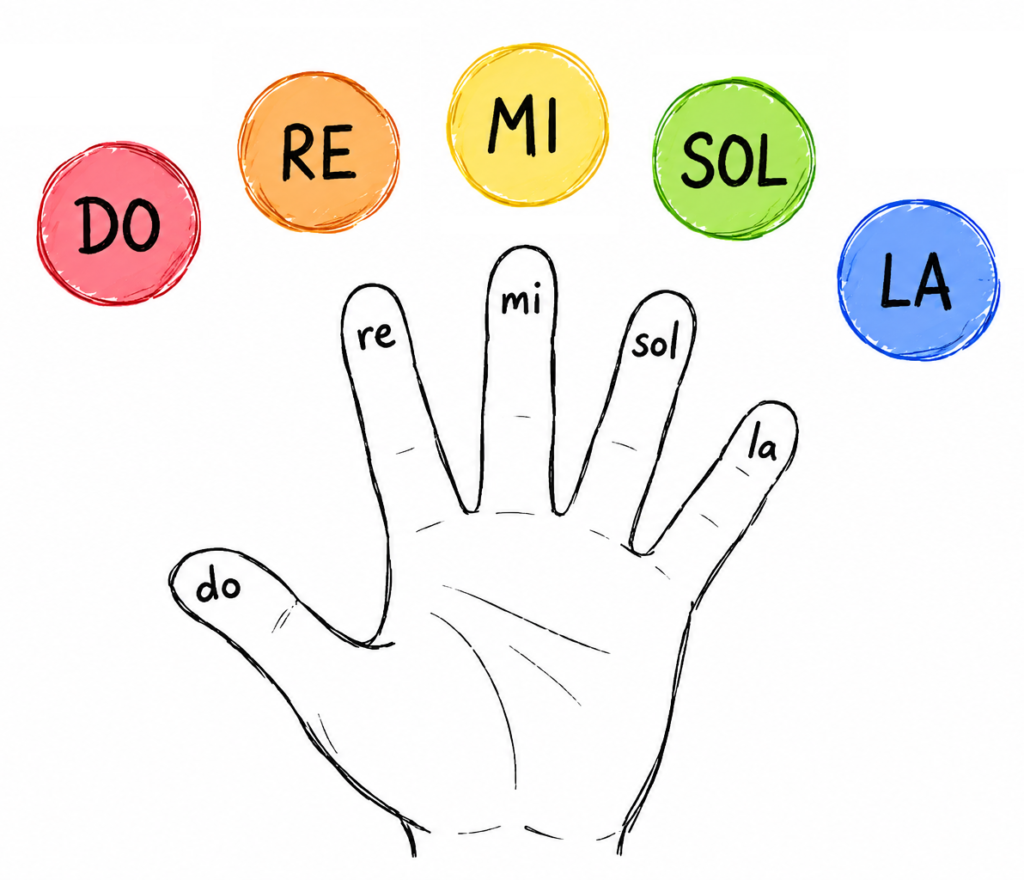
The pentatonic scale does not belong exclusively to China, but Chinese musical thought has made it central in a very influential way. The five-note structure favors simple, easily memorable melodies with a strong sense of identity. Historically speaking, this choice demonstrates that a musical culture can function perfectly well even without the Western concept of full chromaticism. The point is not to have every possible note, but to have a tonal order consistent with the sensibility of that tradition.
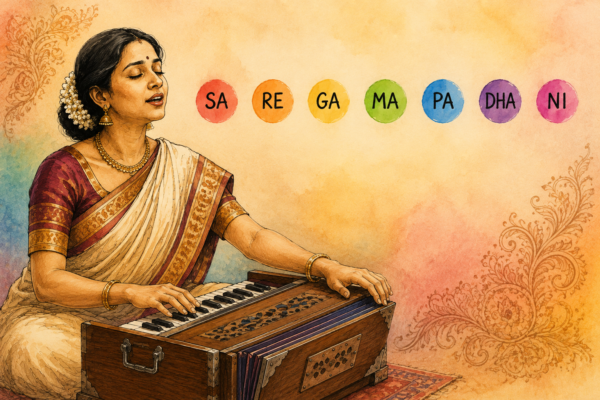
The sargam and the concept of tonal gradation
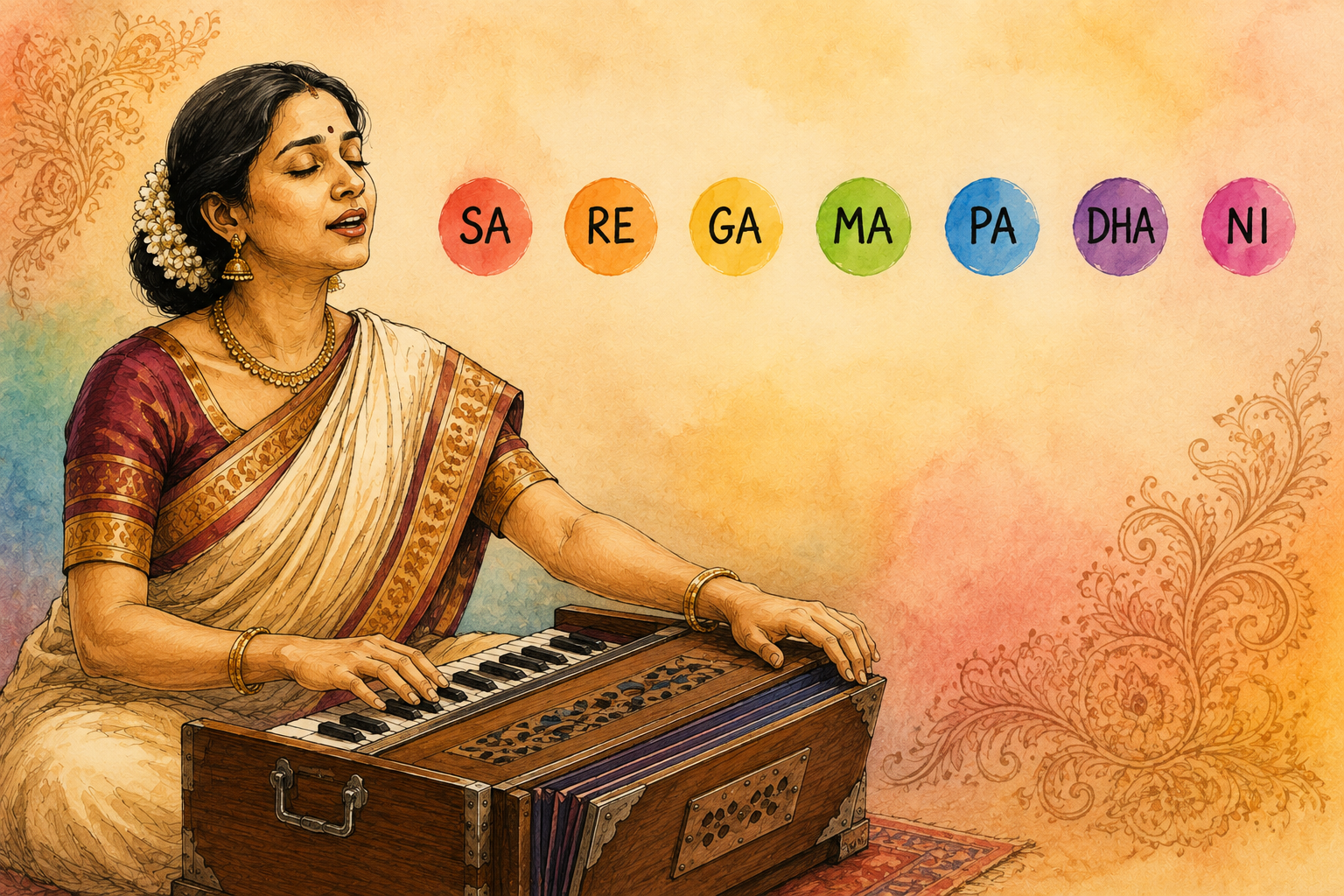
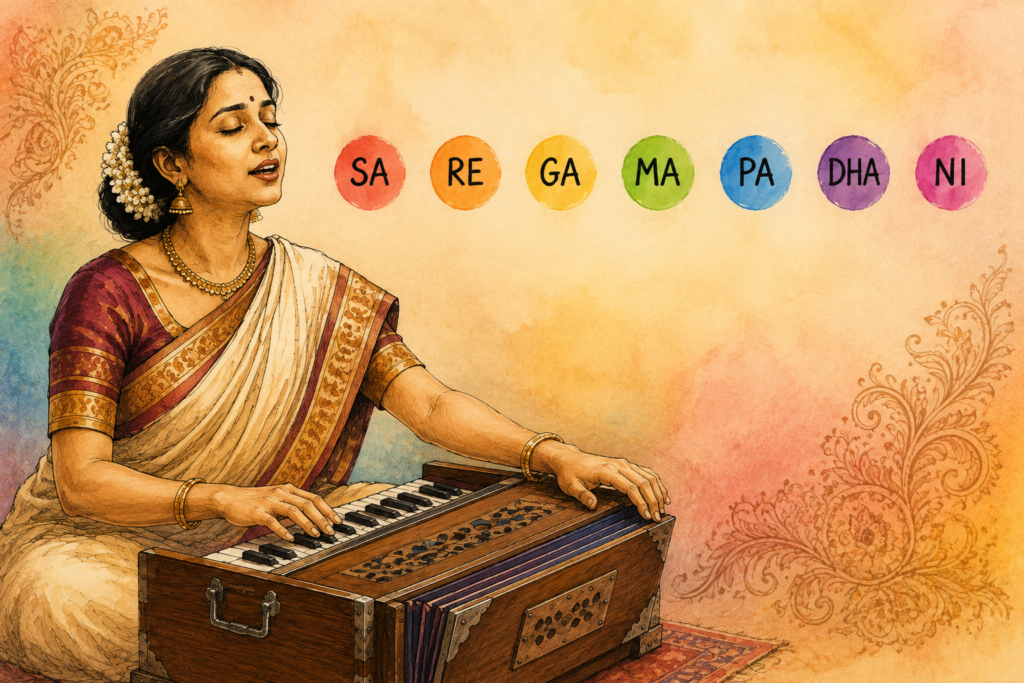
In the Indian tradition as well, musical thought is very ancient and refined. The sargam—that is, the system of syllables used to name the notes—is not merely a mnemonic device: it is a way of conceiving the relationship between the degrees of the scale.
SA → root
RE → second
GA → third
MA → fourth
PA → fifth
DHA → sixth
NI → seventh
In India, however, the system has never been reduced to a simple, abstract division of the octave into equal parts. Indian classical music has always maintained a strong focus on microtones, known as shruti (22 in total, although not all are ever used simultaneously in the same composition), around which ornamentations are created: notes are not viewed as rigid blocks, but as reference points around which the singer or instrumentalist builds and expresses their melodic expressiveness.
This is a fundamental point: many non-Western traditions have not sought absolute mathematical perfection, but rather controlled flexibility. The expressive value of sound is, in fact, often considered more important than the mechanical uniformity of sounds.
https://youtu.be/AIPraIlSmIk?si=3uiA_a0f2hAI1KuA&t=167
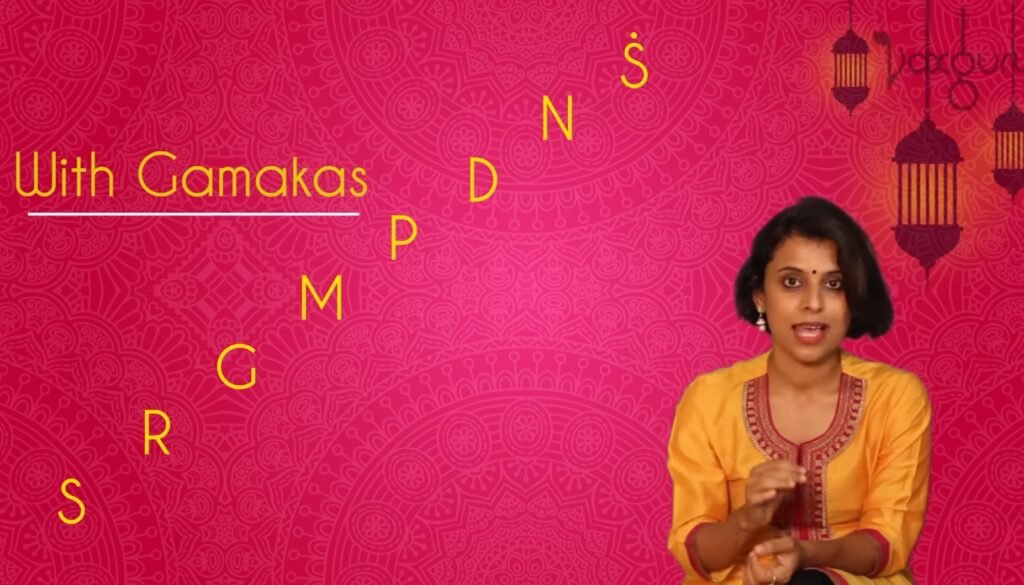
“Music isn’t in the notes, but in what happens when you move from one note to another”
From this perspective, Sargamianmusic displays a highly sophisticated musical conception, yet one firmly rooted in a single, constant key. This is the major difference from what would later develop in Europe. There, the challenge would become a different one: how to reconcile key changes, modulating between multiple chords without the structure of the intonation collapsing at certain points (as in fact happens when using Pythagorean temperament).
Pythagorean Logic
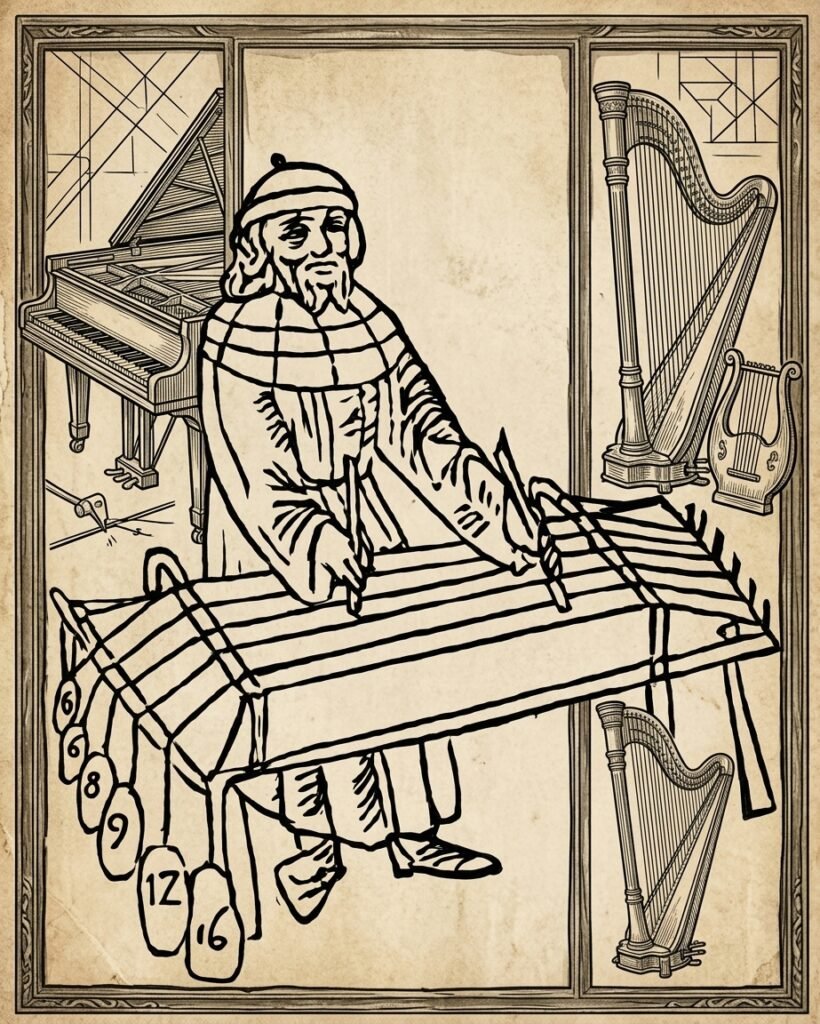
One of the first major theoretical systems of intonation emerged in the Greek world. Pythagora’s name is linked to the discovery of the relationship between string length and pitch. If the length of a string is halved, the pitch rises by one octave. If simple ratios such as 2:1, 3:2, and 4:3 are used, the resulting intervals are perceived as very consonant. From this insight arose the construction of thePythagorean scale, based primarily on the stacking of perfect fifths.
The idea is elegant: I take a starting note, go up a fifth, then another fifth, then another, and so on. In the end, I can derive most of the scale through simple ratios.
For a long time, this system was perfectly suited to contexts in which vertical harmony was not yet as developed as it would be in later eras. In music based on melody, monody, and strong intervals such as the fifth and fourth, the Pythagorean scale works very well.
The problem arises when Western music begins to make increasing use of thirds and triads. The Pythagorean scale, in fact, handles fourths and fifths very well, but it does not produce truly pure major thirds: quite the contrary! (exceeded major thirds sound really unsettling)
The thirds are too wide compared to the acoustic ideal. This was no minor detail: as harmony becomes more complex, it requires greater use of thirds, and it is precisely here that the Pythagorean system immediately reveals its limitations.
The Pythagorean Comma
The first major flaw in the Pythagorean system is that the circle of fifths does not close perfectly. If you stack twelve perfect fifths, you do not arrive exactly at the same point as seven octaves. A small difference remains, called the Pythagorean comma. This difference is small, but in music it can become very troublesome, because it takes very little to make certain keys sound out of tune or unusable.
This is where the great dilemma of the history of tuning comes into play: the problem is not finding the notes, but making them all coexist within a single, harmonically stable system. A scale can be perfectly logical in theory yet prove impractical in practice.
The Pythagorean interval makes it difficult to build an instrument capable of sounding good in all keys. As long as the music remains within narrow modal ranges (fourths and fifths), this flaw is tolerable. When, however, the harmony expands (thirds and sixths), the system becomes inefficient and sometimes unusable.
(Be wary of theories about the tuning fork being in harmony with nature. It’s all false. Tuning and the tuning fork are, moreover, two different things.
432 Hz is NOT a tuning standard, but a choice of intonation slightly lower than 440 Hz, with possible timbral and practical effects; it is not a natural, universal, or therapeutic frequency.)
The Search for Better Systems
To overcome these limitations, numerous intermediate solutions emerged during the Middle Ages and the Renaissance. There is no single linear transition from the Pythagorean system to equal temperament: history is full of experiments, compromises, and local variations.
One of the most important is the mesotonic temperament, which seeks to make major thirds purer at the cost of sacrificing some distant keys. It is a very interesting system because it reflects a specific priority: emphasizing the chord and the full sound, even if this means limiting the freedom to modulate.
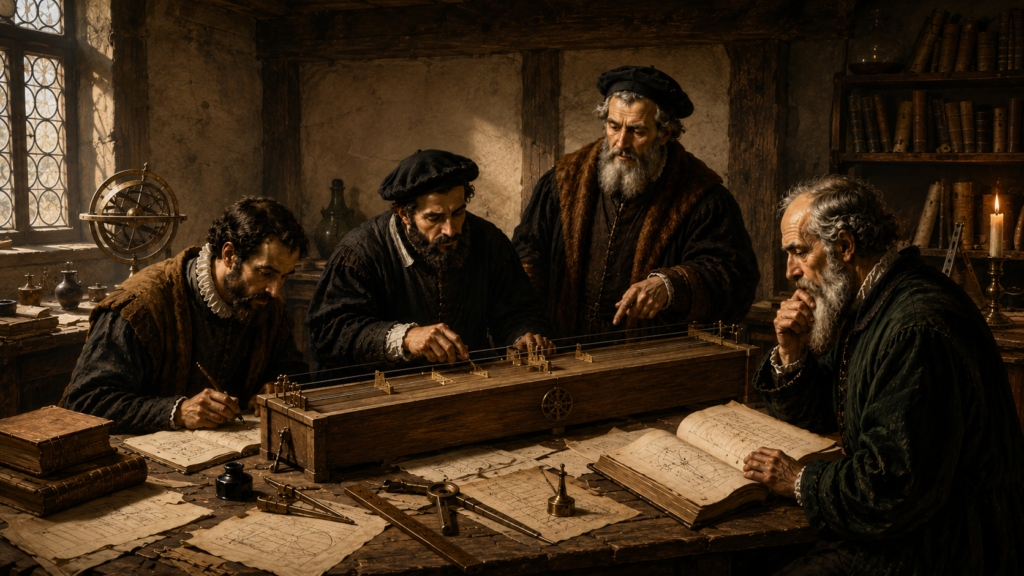
Mesotonic temperament works well in a musical world where some keys are used more often than others. But when the repertoire expands and composers want to move freely from one key to another, even this system becomes inadequate.
That is why the history of ancient and Renaissance temperaments is so rich: every solution corrects one problem but creates another. It is a constant balancing act between interval purity and harmonic freedom.
The Problem of Modulation
The true revolution of the modern era is modulation. Music no longer wants to remain fixed in a single key: it wants to travel, change color, and explore ever-wider harmonic distances.
But the more one moves, the more instruments tuned according to non-equal-temperament systems begin to reveal their asymmetries. Some keys sound good, others are marred by distorted intervals, and still others are practically unusable.
In this context, temperament is no longer merely a technical issue, but becomes an aesthetic and compositional one. If a system favors only certain keys, it limits the composer’s creativity.
If, on the other hand, one seeks to distribute the errors more evenly, one sacrifices some acoustic purity but gains expressive freedom. It is precisely this unstable balance that, over the centuries, led to well-tempered systems and ultimately to 12TET.
From Irregular Temperaments to Well-Tempered
Before the establishment of equal temperament, Europe was home to an extraordinary variety of systems. Some temperaments were closer to the purity of natural ratios, others were more oriented toward certain keys, and still others were designed for specific instruments such as the organ or the harpsichord.
Historical literature reveals a wealth of solutions: irregular temperaments, well-tempered tuning, mesotonic tuning, and variants used in both sacred and secular contexts.
This variety is significant because it refutes the idea of a linear and inevitable historical progression. The 12TET was not “discovered” once and for all and immediately applied everywhere. It is the result of a long process of adaptation.
For centuries, musicians have accepted varying degrees of compromise, seeking the best solution for the available repertoire and the instruments at their disposal, and sometimes experimenting with different tuning systems.
Equal temperament
Equal temperament, or 12TET, solves the problem in a very elegant way from a mathematical standpoint: it divides the octave into twelve equal parts.
Each semitone has the same width, which makes it possible to play in all keys using the same interval structure. The idea is powerful because it shifts the trade-off from the absolute precision of certain intervals to the overall symmetry of the system.
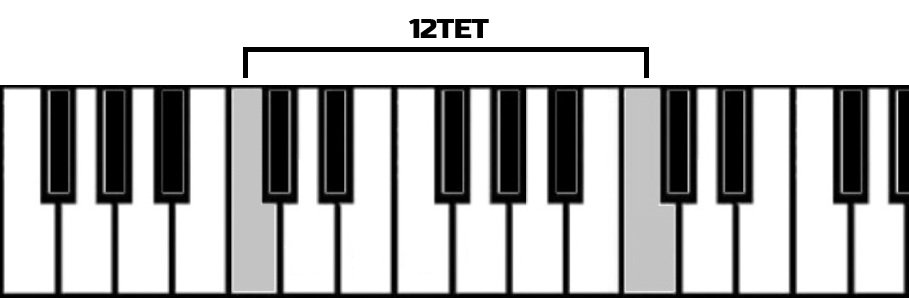
Of course, 12TET does not produce perfect intervals in the acoustic sense. Fifths, thirds, and other intervals do not coincide exactly with the simple ratios of just intonation.
But the advantage is enormous: the system works everywhere, for all keys, and for all modulations. It is a general solution, not a local one.
And that’s exactly why it became the universal language for modern western music.
Why Did Equal Temperament (12TET) Prevail?
The success of 12TET stems from a simple reason: Western music needed a universal system. With the expansion of the tonal repertoire, harmonic composition, and the piano as the central instrument, a system was needed that would not favor one key over another.
The 12TET offers this neutrality. It doesn’t make everything sound “perfect,” but it makes everything sound good enough, in any key.
Another reason for its success is practical. Keyboard instruments, fixed-key instruments, organs, and pianos could be built in a standardized way.
This fostered the international circulation of the repertoire and the emergence of a shared harmonic language. In this sense, the 12TET is not merely a theoretical solution: it is a cultural response to a need for mobility, compatibility, and standardization.
The Price of Standardization
Of course, every standard comes at a cost. The 12TET system sacrifices the absolute purity of natural intervals. The thirds aren’t perfect, the fifths aren’t perfect, but everything is close enough to work well together.
For some musicians and in some traditions, this is an acceptable compromise. For others, especially in vocal or microtonal music, It is a clear limitation.
That is why the history of temperaments does not end with 12TET. The equal-temperament system dominates Western music, but it does not exhaust all the possibilities of sound.
Contemporary music, microtonal research, and many non-European traditions continue to show that there are different ways of organizing intervals. 12TET is the most widespread standard, not the only sensible system possible.
A history of compromises
Looking at the whole picture—from the Chinese pentatonic scale to the Indian sargam, from the Pythagorean scale to Renaissance temperaments all the way to 12TET—a very clear lesson emerges: music seeks not only mathematical precision, but above all expressive functionality.
Each culture decides differently where to strike a balance between purity, flexibility, and practicality.
The Chinese pentatonic scale shows that a simple scale can be musically very rich. The Indian sargam shows that notes can be flexible reference points, not rigid blocks. The phytagorean scale demonstrates the power of pure ratios, but also its limitations when harmony becomes more complex. Subsequent temperaments reflect the desire to correct these limitations without losing the ability to play in multiple keys. Finally, the 12TET represents the culmination of this research: a practical, stable, and universally applicable system
If one were to summarize the entire history in a single sentence, one might say it this way: the history of temperaments is the history of how musical cultures have sought to reconcile the laws of acoustic physics with the needs of art. And it is precisely in this tension between nature, mathematics, and creativity that music finds an important part of its identity.
Returning to the beginning of this article, let’s recall that pentatonic scales are what come closest to the archetypal nature of sound. They resonate instinctively in our musical minds, as Bobby McFerrin demonstrates in this video. The scientific rationale, on the other hand, is explained in my book, in the section dedicated to the subharmonic series. Enjoy listening and exploring!

You may also like