History and Pioneers of Western Overtone Singing
The history of overtone singing in the 20th century can be viewed as a succession of individual insights, research paths, and artistic practices that were often very different from one another, and which progressively broadened the general understanding of the voice.
Within this landscape, figures such as Arthur Miles, Michael Vetter, Roberto Laneri, Bernhard “Bardo” Jaeger, David Hykes, Kiva Simova, Tran Quang Hai, Mark van Tongeren, and Wolfgang Saus occupy distinct yet complementary positions.
Some have blazed new trails almost unconsciously; others have developed personal practices; still others have shaped an analytical and comparative framework for understanding the relationship between the voice, overtones, and listening.
Arthur Miles and 100% Melodic Overtone Singing
Among these figures, Arthur Miles holds a very special place.
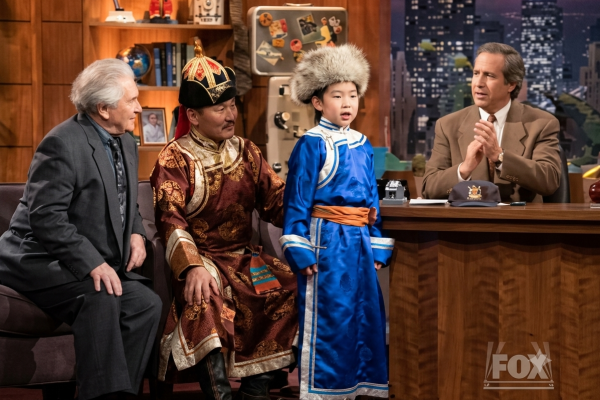
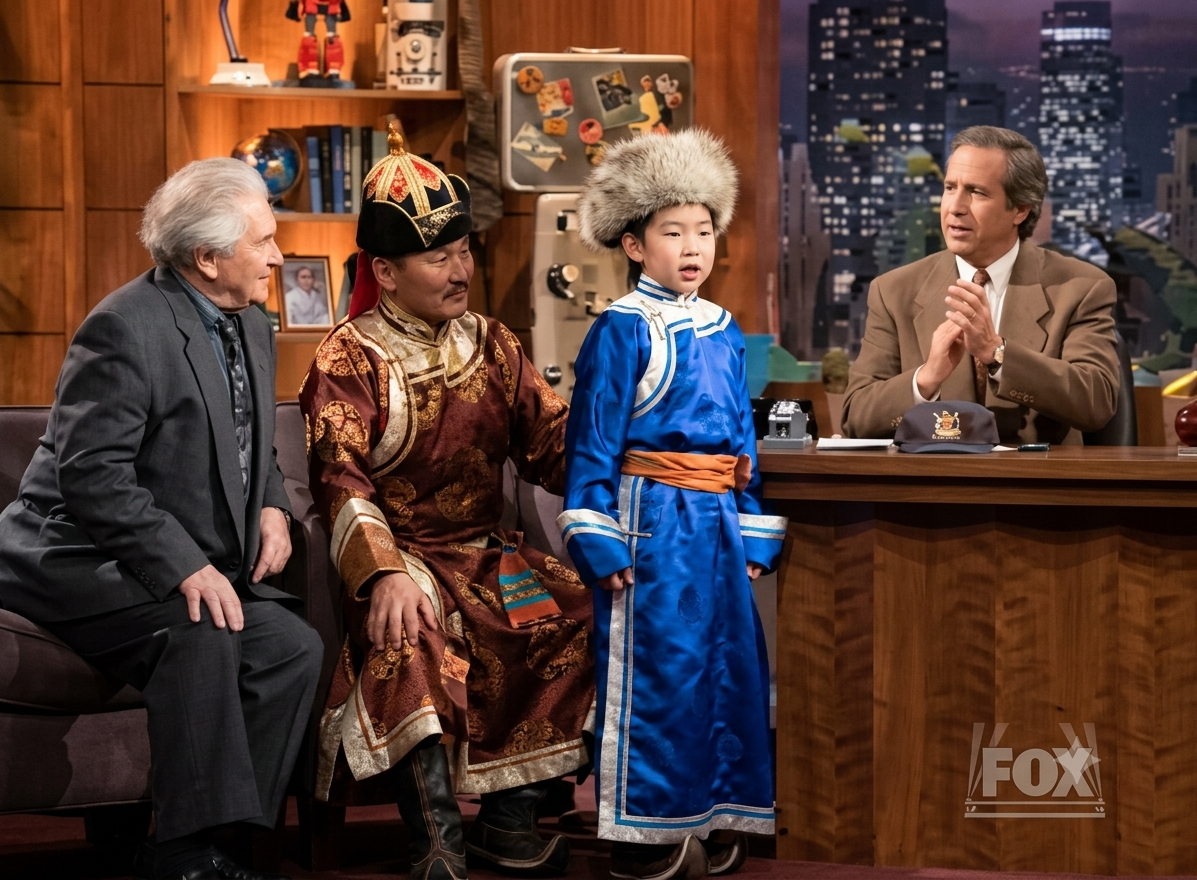
His song “Lonely Cowboy,” recorded in 1929, is one of the most astonishing examples in the history of overtone singing in the West.
Rather than merely a folkloric curiosity, it can be heard as a sign of an extraordinarily advanced sensibility. Arthur Miles does not merely produce audible harmonics; he uses them in a distinctly melodic way, revealing a musical awareness that was very rare for the time.
Rather than a folkloric curiosity, it can be heard as a sign of an extraordinarily advanced sensibility. Arthur Miles does not merely produce audible overtones, but uses them in a clearly melodic way, revealing a musical awareness that was very rare for the time.
This is what makes him such an important figure. Many subsequent performers have used overtones as a timbral effect, as a color, or as an extension of the voice. In Miles’s case, however, one can already discern a precise focus on the melodic profile of the selected overtones.
In that sense, his singing was truly cutting-edge.
It should also be noted that, in his case, it is more accurate to speak of overtone singing than of throat singing. The decisive aspect is not the use of a guttural vocal technique in the strict sense, but the ability to organize the higher harmonics using his “clean” voice as a foundation.
Michael Vetter and Choral Overtone Singing
While Arthur Miles represents a sort of ultra-modern “prehistory” of Western overtone singing, Michael Vetter embodies a fully conscious and deliberate phase of its development.
A musician, composer, and experimentalist, Vetter has long worked on overtone singing as an autonomous artistic practice, making a significant contribution to its spread throughout Europe.
In his work with The Overtone Choir, overtone singing is not treated as a mere vocal effect, but as a field of listening, a perceptual exercise, and compositional material.
Vetter played a decisive role in demonstrating that diphonic singing could be developed not only as an individual skill but also as a collective, choral experience.
His work has placed great emphasis on the quality of resonance, the relationship between breath and listening, and the almost contemplative dimension of sound. In his work, the voice becomes an instrument of exploration, without ever losing its poetic intensity.
Here we see him in a duet with his follow-up artist, Natascha Nikeprelevic.
Bernhard “Bardo” Jaeger and the Inner Dimension of Overtone Singing
Bernhard, known as “the Bard,” was an Italian-Swiss musician and overtone singer.
He experimented with and taught overtone singing beginning in the 1970s; he is still remembered today as one of the most important and talented European practitioners of that era, especially for his clean and effective technique.
He was active as a storyteller and “harmonic narrator”—a contemporary bard who wove together stories, poetry, and harmonic singing in his performances. He performed in small, informal settings, often in natural or community environments, more akin to the tradition of oral storytelling than to a traditional concert.
Bernhard was introduced to overtone singing after a trip to Iran, which then led him to study the technique in depth with Michael Vetter. He typically accompanied himself on the Indian tanpura, alternating between monodic and overtone singing and experimenting with both in modal scales, in addition to playing gongs, Tibetan bells, percussion, and many other ethnic instruments.
Roberto Laneri: Overtone singing and personal vocal exploration
In the Italian context, Laneri is known for his polyphonic experiments, in which the overlapping of different fundamentals allows him to highlight common harmonics—that is, those that coincide at the same frequency even though they belong to different harmonic series. By exploring the voice as an instrument of resonance, intonation, perception, and sound organization, Laneri has connected diphonic overtone singing with contemporary composition. In particular, he has developed what he calls “sound crystals”: musical structures in which two or more fundamental tones are sung simultaneously, and their respective harmonics are selected and emphasized, allowing shared harmonics to emerge separately or coincide (consider, for example, the fifth harmonic of a C and the sixth harmonic of an A).
David Hykes and Harmonic Chant
Founder of the Harmonic Choir, Hykes is one of the most influential figures in the recent history of Western overtone singing.
His work has brought visibility to a vocal practice in which harmonics are prominently featured—not in a strictly melodic way, but rather as a timbral enrichment of sung phrases.
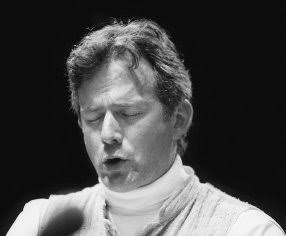
Through the concept of Harmonic Chant, Hykes has developed a language that combines deep listening, choral work, attention to resonance, and the creation of immersive soundscapes.
His contribution was fundamental because he offered a wide audience a clear and recognizable form of contemporary overtone singing, without reducing it to either an exotic phenomenon or pure experimentalism.
In his work, the voice takes on an architectural function: it constructs environments, vibrational fields, and sonic tensions.
Kiva Simova and the Versatility of Overtone Singing
While Hykes made overtone singing recognizable on a large scale, Kiva Simova has powerfully demonstrated its versatility in more hybrid and open contexts.
A musician, singer, and composer, Kiva Simova has brought her work with overtones into dialogue with world music, improvisation, sound theater, and contemporary composition.
Her journey is significant because it demonstrates that overtone singing can thrive even outside of the most contemplative or specialized contexts.
It can become a dynamic performative art form, brimming with stage energy and creative freedom.
In her work, harmonic singing engages in a dialogue with polyphony, improvisational gestures, and a very strong physical presence.
Her art expands the scope of contemporary harmonic singing, demonstrating how this practice can be not only rigorous but also fluid, theatrical, and cross-disciplinary.
Tran Quang Hai and Scientific Research
It is essential to include Tran Quang Hai in this picture—an ethnomusicologist, musician, and researcher who has played a major role in the study and dissemination of diphonic singing.
His contribution is particularly important because he redefined the melodic role of overtones—an essential aspect of traditional khöömei, which fascinated him.
Tran Quang Hai has devoted many years to studying and promoting overtone singing techniques. Although he did not learn vocal techniques in accordance with the khoomei traditions—preferring a completely personal approach to timbre—his contribution has been to redefine the melodic role of overtones by clearly explaining the interval relationships that emerge from the natural harmonic series and encouraging his students to develop a musical ear attuned to this aspect.
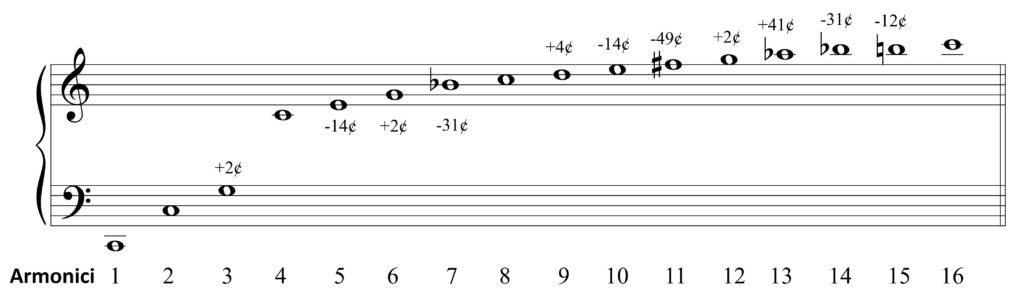
He highlighted how harmonics can be organized, recognized, and made musically meaningful, creating precise and recognizable melodies.
This point is essential: his work was not limited to describing the phenomenon, but helped us understand how the harmonic series already contains a world of musical relationships, pitches, and melodic possibilities.
I remember that when I first met him in 2016, at the “Rassegna di Musica Diversa” in Cento (FE), we sang the melody of “Amazing Grace” together in unison using harmonics.
Mark van Tongeren and the Vocal Traditions of Tuva and Mongolia
Mark van Tongeren is an ethnomusicologist who, since 1990, has devoted himself to the study of overtone singing, with a particular focus on the vocal styles of Tuva and Mongolia.
Between 2010 and 2022, he wrote two important books that examine in detail the musical and ethnomusicological aspects of overtone singing.
His works offer an overview of the similarities and differences between the traditions of Tuva and Mongolia.
During his research, he traveled to Tuva, Mongolia, the Altai Mountains, Tibet, and Taiwan.
As van Tongeren himself states:
“Ethnomusicology is not simply a field of study concerned with exotic music, much less ethnic musicology. It is a discipline that seeks to offer hope for a deeper understanding of all music, conceptually extended to any sound that can be produced by human beings.”¹
Her work helps place overtone singing within a broader ethnomusicological framework, one that takes into account both the specific characteristics of individual traditions and the relationships between voice, culture, and musical organization.
Christian Zehnder, experimental nonverbal overtone music
Christian Zehnder, born in Zurich in 1961 and based in Basel, trained in jazz guitar and classical baritone singing.
After studying overtone singing with Tokne Nonaka and Alfred Wolfsohn’s body-voice techniques, he developed his own unique approach that blends Alpine music, musical theater, and contemporary performance. Zehnder’s diphonic style is characterized by a clear and controlled delivery: he does not use overtones merely as a timbral effect, but selects and articulates them to construct actual melodic lines above the fundamental tone. Her compositions, influenced by yodeling, archaic vocal traditions, and contemporary music, reinterpret the Alpine imagination in an original, experimental, and nonverbal form.
His most famous piece is a version of “Pachelbel’s Canon,” which he arranged for solo overtone singing. The arrangement includes changes in the fundamental pitch that, at times, deviate from equal temperament in order to maintain good intonation in the melody performed with overtones.
Wolfgang Saus also collaborated on the development of the Overtone Analyzer software, released in 2008. The program uses a spectrogram that displays the overtones, indicating their number and the relative differences from equal temperament.
He was the direct teacher of Walter G. Mantovani, an Italian pioneer of multitonal overtone singing who has been active since the 2000s.
A Genealogy of Western Overtone Singing
When placed side by side, these figures trace a very rich genealogy.
Arthur Miles emerges as an isolated and surprising pioneer, capable as early as 1929 of using overtones with a melodic precision that remains striking even today.
Michael Vetter trasforma il canto difonico in pratica d’ascolto e di ensemble.
Roberto Laneri develops a personal, independent, and deeply creative path.
Bernhard “Bardo” Jaeger highlights its inner, experiential dimension and brings an extraordinary clarity to the vocal harmonies.
David Hykes builds a recognizable and internationally influential form of it.
Kiva Simova demonstrates its ability to adapt to diverse performance contexts.
Tran Quang Hai offers one of the most substantial contributions to understanding its musical and interval-based foundations.
Mark van Tongeren broadens the ethnomusicological perspective on overtone singing and the vocal traditions of Tuva and Mongolia.
Wolfgang Saus ultimately elevates Western overtone singing to a high level of technical precision, developing polyphonic overtone singing and contributing to its analysis through computer-based tools.
The Voice as an Instrument of Acoustic Exploration
What unites all these approaches is the idea that the voice is not merely a vehicle for text or melody, but also a space for acoustic exploration.
From this perspective, overtones are not merely an ornament of sound: they are sound itself in its structural depth.
They can become melody, timbre, harmonic field, resonance, and expressive gesture.
And it is precisely here that Arthur Miles once again occupies a unique position.
If we’re accustomed today to thinking of diphonic singing as a field of research, it’s also because in his “Lonely Cowboy” one can already hear—in an embryonic but very clear form—one of the most radical insights of the entire Western musical landscape:
“Overtones are not just to be brought out, but to be sung musically, using as a foundation a clear, well-centered voice capable of sustaining and guiding them with precision. We speak of intuition here, since it is unknown whether Arthur ever came into contact in any way with Tuvan culture, in which the melodic role of overtones has been rooted in tradition since at least 1700 A.D.”

Many years later, the world would discover, thanks to the khöömei singing tradition of Central Asia, that even before Miles, there was already a tradition based entirely on the melodic role of overtones, which were sung as the central element of the singer’s voice.

You may also like