Hormones and the Voice: How Hormonal Changes Affect the Way We Speak and Sing
This article is a popular science adaptation of the content from Omayma Afsah’s scientific review, “Effects of hormonal changes on the human voice: a review,” published in 2024 in *The Egyptian Journal of Otolaryngology*. The goal is to present its main findings in simple, accessible language, with a particular focus on the effects of hormonal changes on the speaking and singing voice.
The Voice Is Also a Matter of Hormones
When we think of the voice, we tend to consider it primarily the result of the functioning of the vocal cords (and the false vocal cords!), breathing, and the resonance cavities. In reality, there is another, less obvious but very important factor: the endocrine system.
Hormones are substances produced by various glands in our body, such as the thyroid, pituitary, adrenal glands, ovaries, and testicles. They travel through the bloodstream to different tissues and alter their activity. The larynx also responds to their effects: in fact, receptors for estrogen, progesterone, androgens, and thyroid hormones have been identified in the vocal cords. This means that a shift in hormonal balance can produce tangible changes in how the voice functions.

Some of these changes are part of the normal life cycle, such as those that occur during puberty, the menstrual cycle, pregnancy, menopause, and aging. Others, however, may be related to endocrine disorders.
For those who use their voices professionally—singers, actors, teachers, and voice-over artists—even relatively small changes can sometimes become very noticeable. A slight reduction in vocal range, increased fatigue, or difficulty reaching certain notes may be almost insignificant in normal conversation, but can have significant consequences when singing.
For this reason as well, according to the review, the evaluation of a voice disorder should not be limited to simply listening. It may include observation of the larynx via videolaryngostroboscopy, acoustic analysis of the voice, and certain aerodynamic parameters—in addition, of course, to the person’s own perception of their problem.
From Puberty to Adulthood: When Hormones Transform the Voice
The first major example of hormonal influence on the voice is right before everyone’s eyes—or rather, in everyone’s ears—the voice change during puberty.
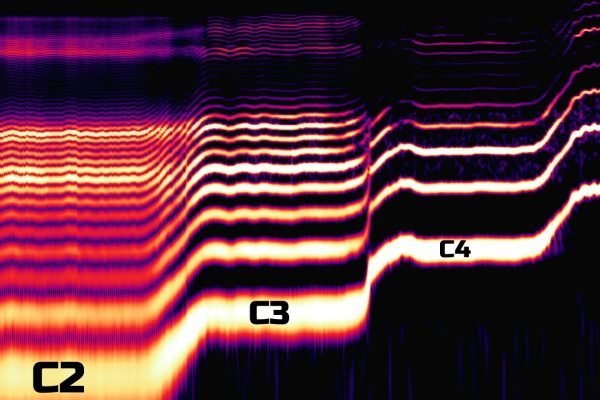
As sex hormone levels rise, the larynx grows and the vocal cords change in size. In males, this process is particularly evident: the vocal tract and larynx increase in size, while the vocal cords become longer and thicker. The fundamental frequency drops considerably, and the voice may lower by as much as an octave overall.
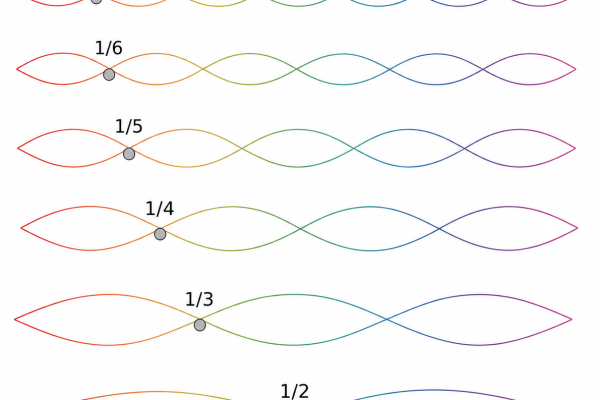
In women, the change is less dramatic but still present: the reduction reported in the review is about one-third. The vocal cords and vocal tract remain, on average, shorter than those of men, contributing to a higher fundamental frequency and a generally brighter timbre.
After puberty, however, the two sexes follow different paths. In men, sex hormone levels remain relatively stable for most of their lives. In women, on the other hand, the voice continues to be subject to the hormonal fluctuations of the menstrual cycle and, later, to the major changes of menopause.
There is also a condition called puberphonia, in which, despite the physical development of the larynx, the voice does not permanently assume the lower pitch typical of adulthood. The cause is most often psychogenic, but the review notes that in some cases it may be associated with hypogonadism. The voice may sound unusually high-pitched, weak, and breathy, with reduced volume and sudden breaks in pitch.
Hormones and the Menstrual Cycle: Why Your Voice Can Change from One Day to the Next
One of the most interesting aspects concerns the relationship between the menstrual cycle and the voice. Fluctuations in estrogen and progesterone can, in fact, cause temporary changes in the vocal cords.

In the days leading up to menstruation, some women experience what is known as premenstrual dysphonia. Among singers, one of the most frequently reported symptoms is difficulty hitting high notes. Vocal fatigue, changes in timbre, and a reduced vocal range may also occur. Historically, this phenomenon was well known in the world of opera: some singers were excused from performances in the days immediately preceding and at the onset of their menstrual period—the so-called “grace days.”
There are also physiological reasons. During the premenstrual period, fluid retention in the vocal cord tissues may increase, causing congestion and edema. At the same time, progesterone can contribute to increased dryness of the mucosa, reducing secretions at the edges of the vocal cords. This can indeed affect guttural timbres produced using the false vocal cords, such as techniques like the growl or kargyraa.
The review also cites studies suggesting a direct effect of sex hormones on laryngeal tissue. Receptors for estrogen, progesterone, and androgens have been identified in both the mucosa and the deeper tissues of the larynx. Observations using narrow-band imaging have also shown an increase in vascular congestion in the larynx during the premenstrual period, coinciding with the peak in progesterone levels.
However, not all effects necessarily stem directly from the vocal cords. Mood swings, muscle tension, and abdominal spasms associated with premenstrual syndrome can indirectly affect breathing and the laryngeal muscles, contributing to vocal difficulties.
Pregnancy and Menopause: Two Challenging Times for the Female Voice
During pregnancy, levels of estrogen and progesterone also increase significantly, and the vocal cords may develop varying degrees of edema and congestion. Among the most commonly reported symptoms are a more breathy voice and increased vocal fatigue, especially during the third trimester.

Other factors may also contribute. Laryngopharyngeal reflux can worsen during pregnancy; furthermore, pregnancy-related rhinitis can lead to mouth breathing and, consequently, increased dehydration of the vocal cord mucosa.
Respiratory mechanics also change during the third trimester: the upward displacement of the diaphragm can reduce the efficiency of respiratory support. In fact, several studies cited in the review have observed a decrease in maximum phonation time during this phase, a parameter that tends to improve after delivery.
Another crucial stage is menopause. The sharp decline in estrogen and progesterone, accompanied by a relative increase in the influence of androgens, can lead to a thickening of the vocal cords and a slight lowering of the voice’s pitch. Fatigue, a loss of vocal range, and difficulty reaching high notes may occur.
These changes are particularly noticeable to professional singers. The review also discusses hormone replacement therapy: some studies have observed that women who take it tend to have a higher voice pitch than menopausal women who do not use it. Estrogens may also promote glandular secretions and positively influence the characteristics of the vocal cord mucosa. Of course, the article emphasizes that the risks and benefits of hormone therapy must be carefully evaluated with appropriate healthcare professionals.
Androgens, Polycystic Ovary Syndrome, and Medications: Some Changes May Become Permanent
Another important part of the review concerns androgens, as their effects can significantly alter the structure of the vocal cords.
In polycystic ovary syndrome (PCOS), for example, hyperandrogenism may contribute to a deepening of the voice. Hypertrophy of the thyroarytenoid muscle—one of the main muscular components of the vocal cords—has been hypothesized. Some studies cited in the article also report a higher frequency of deeper voices, a need to clear the throat, and a reduction in maximum phonation time. Alterations in vocal cord vibration, incomplete glottic closure, and supraglottic hyperfunction have also been observed.
Particular attention is given to exogenous androgens, such as anabolic steroids. In women, they can increase the muscle mass of the vocal cords and lower the fundamental frequency, resulting in a deeper voice. Most importantly, according to the review, these changes can occur after just a few weeks and are often irreversible.
The article also distinguishes older oral contraceptives containing progestin components with greater androgenic activity from modern formulations. The earlier formulations had been associated with negative changes in timbre and range and, in some cases, with possible permanent masculinization of the voice. Modern contraceptives use much lower hormonal doses, and these effects have not been reported; indeed, by stabilizing hormonal fluctuations throughout the cycle, they may also help stabilize the singing voice.
Thyroid: When Dysphonia May Signal a Broader Problem
Among endocrine disorders, thyroid disorders have a particularly close relationship with the voice. According to one of the studies cited in the review, up to one-third of patients with thyroid disorders may experience dysphonia. Specific receptors for thyroid hormones have also been identified in the larynx.
In hypothyroidism, voice disorders can be very common. Symptoms may include dysphonia, fatigue, reduced vocal intensity and range, and a sensation of a foreign body in the throat. The accumulation of certain substances and fluids in the lamina propria can increase the mass of the vocal cords and reduce their ability to vibrate, resulting in a deeper, more irregular voice.
In the most severe cases, changes similar to Reinke’s edema may occur. The good news is that, according to the review, voice changes associated with hypothyroidism can resolve completely within a few months after thyroid function returns to normal.
In mild hyperthyroidism, however, the voice often shows no significant changes. In more severe cases, tremors, muscle weakness, fatigue, and dehydration can cause the voice to become tremulous, breathy, and weak, with a reduced ability to sustain speech.
The thyroid gland can also affect the voice for purely anatomical reasons. Very large goiters, tumors, or inflammatory conditions can compress or affect the nerves that control the larynx. Thyroid surgery also requires special attention to the laryngeal nerves: damage to them can cause paralysis or weakness of the vocal cords, with consequences ranging from a breathy voice to a loss of volume and range, and even difficulty producing high notes. For a singer, this last symptom in particular can be one of the first signs of a problem with the superior laryngeal nerve.
Pituitary gland, adrenal glands, diabetes, and aging: the voice as a mirror of the body
Finally, the article considers other endocrine conditions that are less immediately associated with the voice.
Excess growth hormone in adults causes acromegaly. The larynx also enlarges and the vocal cords thicken: the fundamental frequency decreases, and the voice becomes deeper. In some patients, generalized muscle weakness may also cause weak and easily fatigued voice production.
In Cushing’s disease, caused by excessive pituitary production of ACTH, vocal changes are more pronounced in women and can range from premenstrual-like changes to marked and potentially irreversible virilization of the voice. Prolactin-producing tumors can also cause premenstrual-like changes in women.
In congenital adrenal hyperplasia, excessive androgen production can lead to a deeper voice and a darker timbre in women.
Finally, the review also addresses diabetes. Dysphonia is reported in 12.5% of diabetic patients, at a rate more than double that of healthy individuals. Neuropathies, microvascular problems, and muscle issues can impair fine control of the larynx; in advanced cases, neuropathy can even contribute to vocal cord paralysis. Dry mouth and vocal mucosa, fatigue, and other systemic effects of the disease can further impair vocal performance.
Even the normal aging process in men demonstrates just how closely linked hormones and the voice are. With the gradual decline in testosterone and the loss of muscle mass, the vocal cords in older men can become thinner and more curved, closing less effectively. The result can be a more breathy voice and, interestingly, an increase in fundamental frequency.
Can the voice serve as a warning sign?
The review’s concluding message is particularly important: a persistent change in the voice is not necessarily just a problem with the larynx.

The voice reflects the interaction between the respiratory system, musculature, nervous system, mucous membranes, vocal cord structure, and endocrine system. A seemingly simple change—a suddenly deeper voice, loss of high notes, unexplained fatigue, tremor, or reduced vocal range—can sometimes be one of the first signs of a hormonal imbalance.
Of course, this does not mean that every vocal problem should be attributed to an endocrine disorder. Rather, it means that—especially when the change is persistent or unexplained—the voice should be considered within the context of the entire body.
For singers and voice professionals, this principle is even more important: their sensitivity to changes in their own vocal function can allow them to detect changes long before they become apparent in normal conversation.
The review concludes by emphasizing the importance of collaboration between voice professionals and endocrinologists. In some cases, dysphonia may even be the first sign of a more serious systemic disease.
Source: Omayma Afsah, “Effects of hormonal changes on the human voice: a review,” The Egyptian Journal of Otolaryngology, 2024, 40:22.

You may also like