Tuvan Khöömei: History, Philosophy, and Techniques of Traditional Tuvan Throat Singing Tuvan Khoomei is what has most fascinated me in my studies and research on overtone singing over the past few years, guiding me in the creation of a large …


Tuvan Khöömei: History, Philosophy, and Techniques of Traditional Tuvan Throat Singing Tuvan Khoomei is what has most fascinated me in my studies and research on overtone singing over the past few years, guiding me in the creation of a large …

If we examine the harmonic and subharmonic series closely, we can see how pentatonic scales manifest within them. For this reason, whether consciously or not, human beings have always created music by making extensive use of these two scales, until …
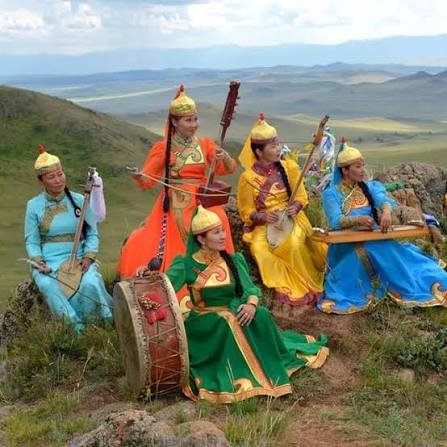
On February 4, 2020, I met Choduraa Tumat in Venice, at Ca’ Foscari University, during an ethnomusicology course. From that moment on, we stayed in touch, and she told me about the development of female overtone singing in Tuva, and …
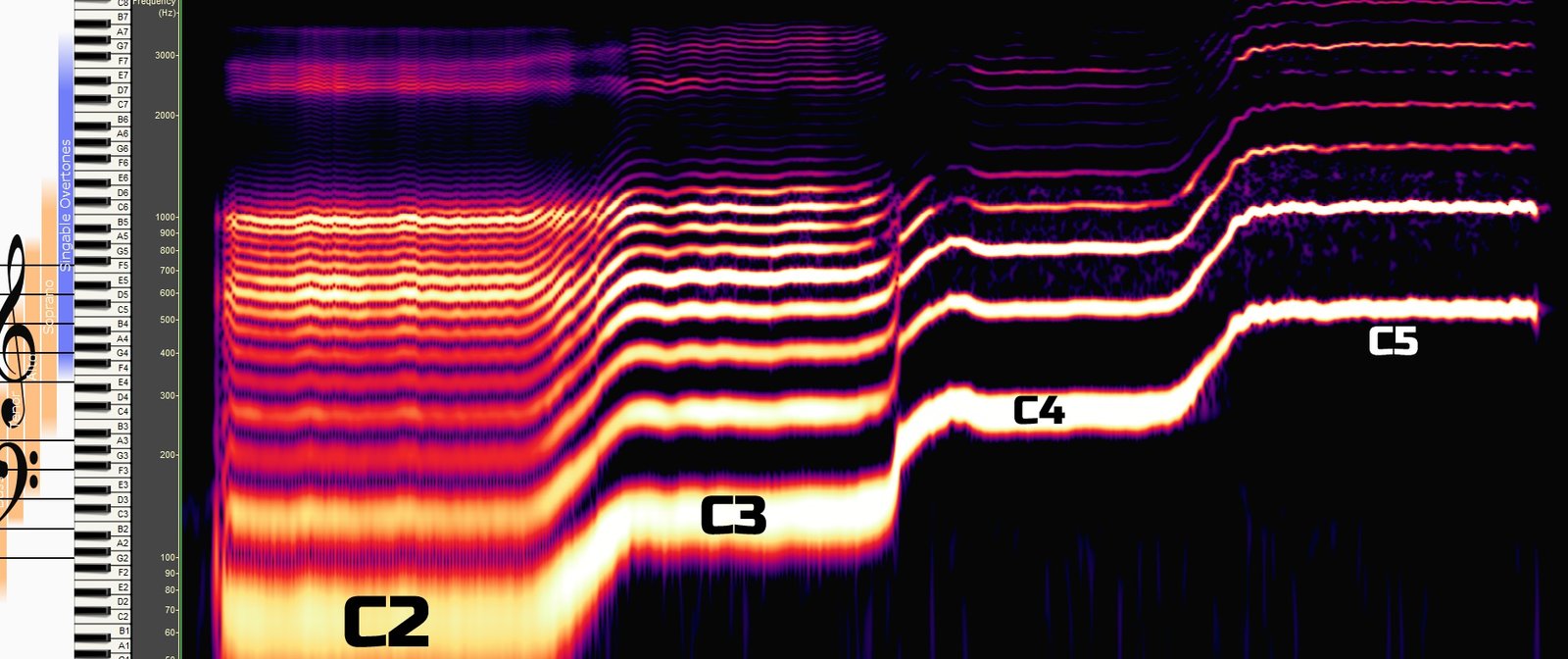
In overtone singing, the choice of the fundamental note is a structural decision that determines which harmonics will actually be available, how audible they will be, and to what extent they can be selected melodically with precision. In the practice …

This article is a popular science adaptation of the content from Omayma Afsah’s scientific review, “Effects of hormonal changes on the human voice: a review,” published in 2024 in *The Egyptian Journal of Otolaryngology*. The goal is to present its …
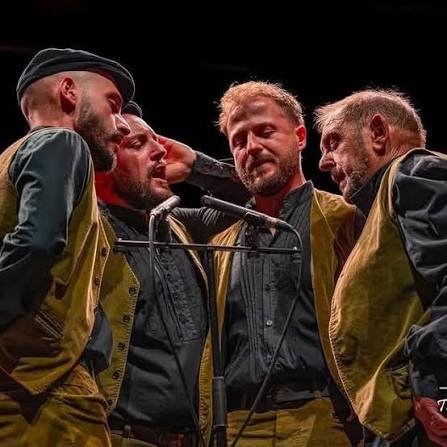
If you want to hear singers who masterfully use guttural vocals, there’s certainly no shortage of opportunities these days, given the many Tuvan and Mongolian groups touring the world. Let’s keep in mind, however, that in Sardinia (an island geopolitically …
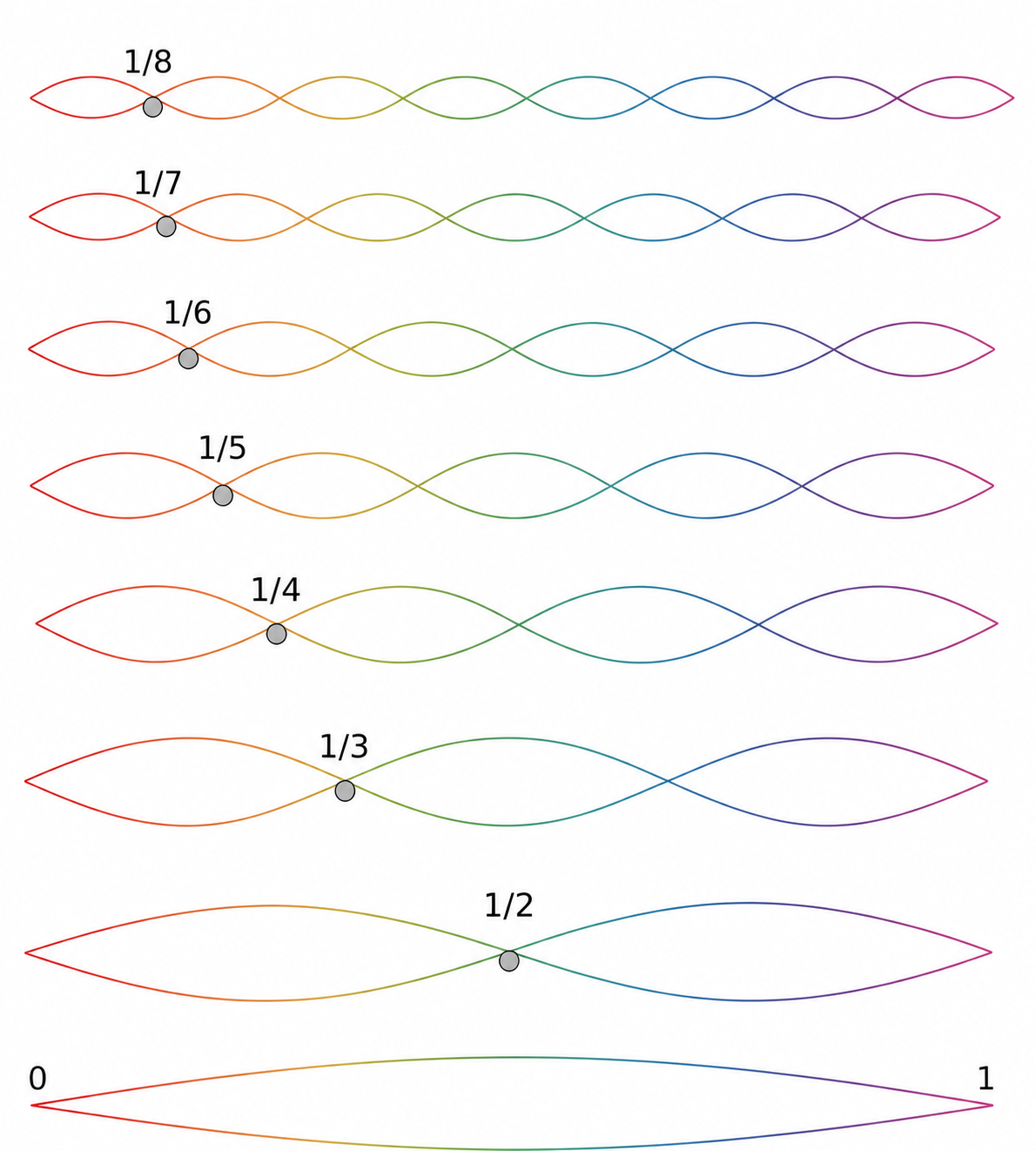
When a musical instrument produces a note, it rarely emits a single frequency. The sound contains a main frequency, called the fundamental, along with other higher-pitched frequencies called harmonics, which propagate uniformly. The combination of the fundamental frequency and harmonics …

There are three main techniques that the human voice can use to bring out natural harmonics. In a previous article, I discussed Khöömei, an ancient vocal art passed on in the Tuva, also Altaic and in Mongolia. In this article, …
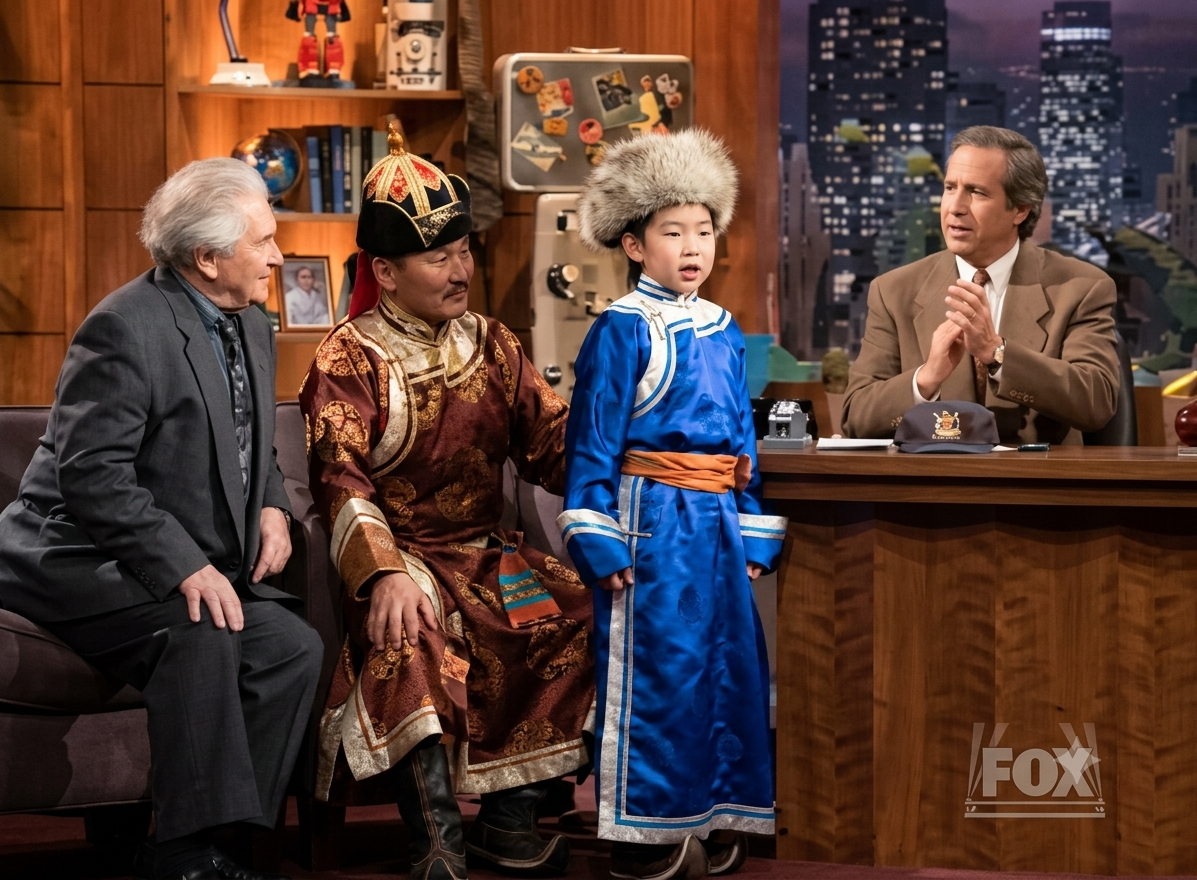
The history of overtone singing in the 20th century can be viewed as a succession of individual insights, research paths, and artistic practices that were often very different from one another, and which progressively broadened the general understanding of the …

Polyrhythm and polyphony are not exactly the same phenomenon: the former involves the overlapping of different rhythms, while the latter involves the simultaneous presence of multiple independent melodic lines. They are, however, closely related, because both arise from the organized …

